As a supplier of High Speed Dispersers, I understand the importance of optimizing the operation parameters to achieve the best performance and results. In this blog post, I will share some key insights and strategies on how to optimize the operation parameters of a High Speed Disperser.
Understanding the Basics of High Speed Dispersers
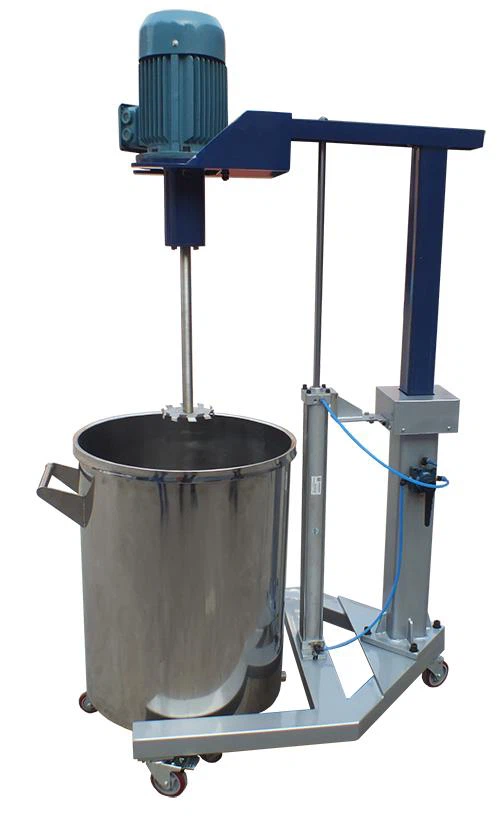
Before diving into the optimization process, it's essential to have a clear understanding of how High Speed Dispersers work. A High Speed Disperser is a machine used for mixing, dispersing, and homogenizing various materials, such as paints, coatings, inks, adhesives, and pharmaceuticals. It consists of a motor, a shaft, a dispersing blade, and a mixing vessel. The dispersing blade rotates at high speeds, creating a strong shear force that breaks down agglomerates and distributes the particles evenly throughout the liquid medium.
Key Operation Parameters to Consider
To optimize the operation of a High Speed Disperser, several key parameters need to be carefully considered and adjusted. These parameters include:
1. Speed
The speed of the dispersing blade is one of the most critical parameters. It directly affects the shear force generated and the efficiency of the dispersion process. Higher speeds generally result in better dispersion, but they can also cause overheating, splashing, and damage to the materials. Therefore, it's important to find the optimal speed for each specific application. This can be determined through trial and error or by referring to the manufacturer's recommendations.
2. Blade Size and Shape
The size and shape of the dispersing blade also play a significant role in the dispersion process. Different blade designs are suitable for different types of materials and applications. For example, a sawtooth blade is commonly used for high-viscosity materials, while a flat blade is more suitable for low-viscosity materials. The blade size should be selected based on the volume of the mixing vessel and the desired shear rate.
3. Mixing Time
The mixing time is another important parameter. It depends on the type and quantity of the materials, the desired degree of dispersion, and the speed of the disperser. Longer mixing times generally result in better dispersion, but they can also increase energy consumption and production costs. Therefore, it's important to find the optimal mixing time for each specific application.
4. Temperature
The temperature of the materials during the dispersion process can also affect the performance of the High Speed Disperser. Some materials may require heating or cooling to achieve the desired viscosity and dispersion. It's important to monitor and control the temperature to ensure consistent results.
5. Viscosity
The viscosity of the materials is a crucial factor in the dispersion process. High-viscosity materials require more energy and higher shear forces to achieve proper dispersion. Therefore, it may be necessary to adjust the speed, blade size, or mixing time to accommodate high-viscosity materials.
Optimization Strategies
Now that we have a clear understanding of the key operation parameters, let's discuss some optimization strategies that can help you achieve the best performance from your High Speed Disperser.
1. Conduct a Material Analysis
Before starting the dispersion process, it's important to conduct a thorough analysis of the materials. This includes determining the viscosity, density, particle size, and chemical properties of the materials. This information will help you select the appropriate blade size, shape, and speed for the dispersion process.

2. Start with Low Speeds
When starting the High Speed Disperser, it's recommended to start with low speeds and gradually increase the speed as the materials become more dispersed. This helps to prevent splashing, overheating, and damage to the materials.
3. Monitor the Process
During the dispersion process, it's important to monitor the temperature, viscosity, and dispersion quality of the materials. This can be done using various sensors and measurement tools. If any issues are detected, adjustments can be made to the operation parameters to ensure optimal performance.
4. Use the Right Blade
As mentioned earlier, the blade size and shape are crucial for the dispersion process. Make sure to select the right blade for each specific application. You can refer to the manufacturer's recommendations or consult with a technical expert for guidance.
5. Optimize the Mixing Time
Finding the optimal mixing time is essential for achieving the desired degree of dispersion. This can be determined through trial and error or by using a process optimization software. Make sure to record the mixing time and other operation parameters for future reference.
6. Maintain the Disperser
Regular maintenance of the High Speed Disperser is crucial for its long-term performance and reliability. This includes cleaning the dispersing blade, checking the motor and bearings, and lubricating the moving parts. Follow the manufacturer's maintenance schedule and guidelines to ensure proper operation.
Our High Speed Disperser Products
At our company, we offer a wide range of High Speed Dispersers to meet the diverse needs of our customers. Our products include the Manual Lifting High Speed Disperser, the EBF Series Hydraulic Lifting High Speed Disperser, and the Pneumatic Lifting High Speed Disperser. Each of these models is designed with advanced features and high-quality components to ensure efficient and reliable operation.
Contact Us for Purchase and Consultation
If you're interested in learning more about our High Speed Dispersers or need assistance with optimizing the operation parameters, please feel free to contact us. Our team of experts is always ready to provide you with professional advice and support. We look forward to working with you to achieve your production goals.
References
- Smith, J. (2018). High Speed Dispersers: Principles and Applications. New York: Wiley.
- Johnson, R. (2019). Optimization of Dispersion Processes in High Speed Dispersers. Journal of Chemical Engineering, 45(2), 123-135.
- Brown, A. (2020). The Impact of Blade Design on the Performance of High Speed Dispersers. International Journal of Industrial Engineering, 32(3), 234-246.