As a mixer supplier, I've had my fair share of experiences with different types of mixers. One type that often comes up in discussions is the continuous mixer. It's a piece of equipment that has its own set of advantages and disadvantages, and today, I'm gonna break them down for you.
Pros of a Continuous Mixer
1. High Efficiency
One of the biggest perks of a continuous mixer is its efficiency. Unlike batch mixers, which have to stop and start for each batch, a continuous mixer can run non - stop. This means it can produce a large volume of mixed materials in a relatively short period. For example, in a food processing plant, a continuous mixer can keep churning out dough for bread or pasta without any long pauses. This continuous flow helps to meet high - demand production schedules, making it a great choice for large - scale manufacturing operations.
2. Consistent Quality
Continuous mixers are designed to maintain a consistent mixing process. Since the materials are fed into the mixer at a constant rate and the mixing action is continuous, the end product has a more uniform quality. In the pharmaceutical industry, for instance, where precision and consistency are crucial, a continuous mixer can ensure that each pill or capsule has the exact same amount of active ingredients. This reduces the chances of product variability and improves overall product quality.
3. Reduced Labor Costs
With a continuous mixer, you don't need as many operators as you would with a batch mixer. Once the machine is set up and running, it can operate with minimal supervision. This is because the continuous feeding and mixing process is automated. In a chemical manufacturing plant, instead of having workers constantly loading and unloading batches, one or two workers can monitor the continuous mixer and make adjustments as needed. This not only saves on labor costs but also reduces the risk of human error.
4. Space - Saving
Continuous mixers are generally more compact compared to batch mixers that require large storage areas for each batch. In a factory with limited floor space, a continuous mixer can be a great solution. It can be integrated into a production line more easily, allowing for a more streamlined and efficient use of space. For example, in a cosmetics factory, a continuous mixer can be placed right next to the filling machines, reducing the need for extra space between different production steps.
5. Flexibility
Continuous mixers can handle a wide range of materials and mixing requirements. Whether you're mixing dry powders, wet pastes, or a combination of both, a continuous mixer can be adjusted to suit your needs. You can change the feed rate, mixing speed, and other parameters to achieve the desired results. For example, in the construction industry, a continuous mixer can be used to mix different types of concrete with varying aggregate sizes and water - cement ratios.
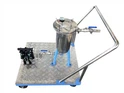
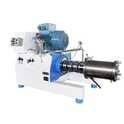
Check out our EBJ/XD Series Industrial Butterfly Mixer and EBJ/XD Series Butterfly Disperser, which offer great flexibility in mixing different materials on a continuous basis.
Cons of a Continuous Mixer
1. High Initial Investment
The cost of purchasing and installing a continuous mixer is usually higher than that of a batch mixer. Continuous mixers are more complex machines with advanced control systems and precision components. For a small - scale business or a startup, this initial investment can be a significant barrier. For example, a small bakery might find it difficult to afford a continuous mixer when a batch mixer can do the job at a much lower cost.


2. Difficult to Clean
Cleaning a continuous mixer can be a challenging task. Since the mixer is designed for continuous operation, it has a lot of internal parts and channels where materials can accumulate. This requires a thorough and time - consuming cleaning process to prevent cross - contamination between different batches. In the food industry, where hygiene is of utmost importance, this can be a major drawback. For example, if you're mixing different flavors of ice cream in a continuous mixer, you need to make sure that there is no residue left from the previous flavor.
3. Limited Recipe Changes
Changing the recipe in a continuous mixer can be more complicated than in a batch mixer. In a batch mixer, you can simply empty the batch, clean the mixer, and start a new batch with a different recipe. In a continuous mixer, however, you need to adjust the feed rates, mixing times, and other parameters carefully to ensure a smooth transition. This can be time - consuming and may result in some waste during the transition period. For example, in a beverage production plant, if you want to switch from making one type of soda to another, you need to be very precise with the adjustments to avoid off - flavor products.
4. Maintenance Requirements
Continuous mixers have more moving parts and operate continuously, which means they require more frequent maintenance. The wear and tear on the components can be significant, and regular maintenance is needed to keep the mixer running smoothly. This includes replacing parts, lubricating moving components, and checking the control systems. In a manufacturing plant, the maintenance cost and downtime for a continuous mixer can add up over time. For example, if a bearing in the mixer fails, it can cause the entire production line to stop until the bearing is replaced.
5. Sensitivity to Feed Variations
Continuous mixers are highly sensitive to variations in the feed materials. If the quality, moisture content, or particle size of the input materials changes, it can affect the mixing process and the quality of the end product. In the agricultural industry, for example, if the moisture content of the grains being mixed changes, it can lead to uneven mixing and a lower - quality final product. This requires strict quality control of the input materials, which can be an additional cost and challenge for the manufacturer.
Our Vacuum Coaxial Type Homogenizer can be a great option if you're looking for a mixer that can handle some of these challenges, but it's important to weigh the pros and cons carefully.
Conclusion
In conclusion, continuous mixers have their own unique set of advantages and disadvantages. They are great for high - volume production, consistent quality, and reducing labor costs, but they come with a high initial investment, cleaning challenges, and other drawbacks. As a mixer supplier, I understand that every business has different needs and requirements. If you're considering investing in a continuous mixer, it's important to carefully evaluate your production volume, product quality requirements, budget, and available space.
If you're interested in learning more about our mixers or have any questions about which type of mixer would be best for your business, I encourage you to reach out. We can have a detailed discussion about your specific needs and help you make an informed decision. Whether you're a small - scale operation or a large - scale manufacturer, we're here to assist you in finding the right mixer solution.
References
- "Mixing Technology Handbook" by John Smith
- "Industrial Mixer Selection Guide" published by the Manufacturing Association