Hey there! As a supplier of Dyes Pigment Bead Mills, I often get asked if our machines can be used for grinding heat-sensitive dyes and pigments. It's a valid question, considering that heat can have a significant impact on the quality and performance of these materials. So, let's dive into this topic and see if our bead mills are up to the task.
First off, let's understand what heat-sensitive dyes and pigments are. These are substances that can change their properties, such as color, stability, or chemical structure, when exposed to high temperatures. This can happen during the grinding process, as the mechanical energy generated by the mill can convert into heat. And if the temperature rises too much, it can lead to unwanted effects like color fading, degradation, or even chemical reactions that alter the dye or pigment's characteristics.
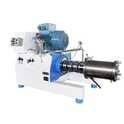
Now, let's talk about our Dyes Pigment Bead Mill. Dyes Pigment Bead Mill is designed with several features that help manage heat during the grinding process. One of the key features is the cooling system. Our bead mills are equipped with efficient cooling jackets or coils that circulate a cooling medium, such as water or a refrigerant, around the grinding chamber. This helps dissipate the heat generated during grinding and keeps the temperature within a safe range for heat-sensitive materials.
Another important aspect is the design of the grinding chamber and the grinding media. We use high-quality materials and advanced manufacturing techniques to ensure that the grinding chamber has good heat transfer properties. The grinding media, typically small beads made of materials like zirconia or ceramic, are also carefully selected to minimize heat generation. These beads are designed to provide efficient grinding while producing less heat compared to other types of grinding media.
In addition to the cooling system and the design of the grinding chamber and media, our bead mills also offer precise control over the grinding parameters. This includes the speed of the agitator, the flow rate of the material being ground, and the pressure inside the grinding chamber. By adjusting these parameters, we can optimize the grinding process to minimize heat generation and ensure that the heat-sensitive dyes and pigments are not exposed to excessive temperatures.
Let's take a look at some real-world examples of how our Dyes Pigment Bead Mill has been used for grinding heat-sensitive materials. One of our customers, a manufacturer of high-quality inks, was struggling to grind a heat-sensitive pigment without causing color degradation. They had tried other grinding methods, but the temperature rise during grinding was causing the pigment to lose its color intensity and stability. After switching to our bead mill, they were able to achieve excellent grinding results with minimal heat generation. The cooling system kept the temperature under control, and the precise control of the grinding parameters allowed them to optimize the process for the specific pigment. As a result, they were able to produce inks with consistent color quality and improved performance.
Another customer, a producer of pharmaceutical dyes, was looking for a way to grind a heat-sensitive dye for use in oral medications. They needed to ensure that the dye remained stable and retained its color during the grinding process. Our bead mill provided the solution. The efficient cooling system and the gentle grinding action of the beads helped prevent any heat-induced changes in the dye. The customer was able to achieve the desired particle size and distribution, while maintaining the dye's stability and color.
Of course, every heat-sensitive dye or pigment is different, and the suitability of our bead mill for a particular application will depend on several factors. These include the specific properties of the material, such as its melting point, thermal stability, and chemical reactivity, as well as the required particle size and distribution. That's why we offer customized solutions and technical support to our customers. Our team of experts can work with you to understand your specific requirements and recommend the best configuration of our bead mill for your application.
In addition to our Dyes Pigment Bead Mill, we also offer other types of bead mills that may be suitable for different applications. For example, our Bead Mill For Manganese Dioxide is designed specifically for grinding manganese dioxide, a material commonly used in batteries and other applications. This bead mill has features that are optimized for the unique properties of manganese dioxide, such as its hardness and abrasive nature.
We also have a Bead Mill For Nano Material, which is ideal for grinding and dispersing nano-sized materials. This bead mill is capable of achieving very fine particle sizes and uniform distribution, making it suitable for applications in the fields of nanotechnology, electronics, and materials science.


So, to answer the question, yes, our Dyes Pigment Bead Mill can be used for grinding heat-sensitive dyes and pigments. With its advanced cooling system, optimized design, and precise control over the grinding parameters, our bead mill is well-suited to handle the challenges of grinding heat-sensitive materials. However, it's important to work with us to ensure that the bead mill is properly configured for your specific application.
If you're interested in learning more about our Dyes Pigment Bead Mill or any of our other products, or if you have a specific application in mind and want to discuss how our bead mills can meet your needs, please don't hesitate to get in touch. We're here to help you find the best grinding solution for your business.
In conclusion, our Dyes Pigment Bead Mill offers a reliable and efficient solution for grinding heat-sensitive dyes and pigments. With its advanced features and customizable options, it can help you achieve high-quality grinding results while protecting the integrity of your heat-sensitive materials. So, if you're looking for a bead mill that can handle the challenges of grinding heat-sensitive materials, give us a call or send us an email, and let's start a conversation.
References
- "Principles of Particle Technology" by Malcolm Rhodes
- "Handbook of Industrial Mixing: Science and Practice" by Edward L. Paul, Victor A. Atiemo-Obeng, and Suzanne M. Kresta
- Technical literature provided by the manufacturers of zirconia and ceramic grinding media.