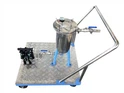
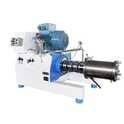
Hey there! As a supplier of laboratory bead mills, I often get asked about how to adjust the flow rate in these machines. It's a crucial aspect of getting the most out of your bead mill, and today, I'm gonna share some tips and tricks to help you do just that.
First off, let's understand why adjusting the flow rate matters. The flow rate determines how quickly the material passes through the bead mill. If it's too fast, the material might not get properly ground or dispersed. On the other hand, if it's too slow, it can lead to over - processing, which might damage the material or waste energy.
Factors Affecting Flow Rate
There are several factors that can influence the flow rate in a laboratory bead mill.
Viscosity of the Material
The viscosity of the material you're processing plays a huge role. Thick, viscous materials flow more slowly than thin, watery ones. For example, if you're using a bead mill to process a thick paste, you'll likely need to set a lower flow rate compared to when you're working with a liquid solution.
Size and Type of Beads
The size and type of beads in the mill also impact the flow rate. Smaller beads can pack more tightly, creating more resistance to the flow of the material. So, if you're using small - sized beads, you might need to adjust the flow rate accordingly. Different types of beads, like Aluminum Dioxide Bead Mill, have different densities and surface properties, which can affect how the material moves through the mill.
Rotor Speed
The speed at which the rotor in the bead mill spins is another important factor. A higher rotor speed can increase the shear forces in the mill, which can help the material flow more easily. However, if the rotor speed is too high, it can cause excessive heat generation and might even damage the beads or the material.
Methods to Adjust the Flow Rate
Now that we know what affects the flow rate, let's look at how we can adjust it.
Pump Settings
Most laboratory bead mills are equipped with a pump to control the flow of the material. You can usually adjust the pump speed to change the flow rate. If you want to increase the flow rate, you can increase the pump speed. But be careful not to set it too high, as it might cause the material to bypass the grinding action. Conversely, if you need to slow down the flow, reduce the pump speed.
Inlet and Outlet Valves
The inlet and outlet valves of the bead mill can also be used to adjust the flow rate. By partially closing the inlet valve, you can restrict the amount of material entering the mill, thus reducing the flow rate. Similarly, adjusting the outlet valve can help control the rate at which the processed material leaves the mill.
Changing the Mill Configuration
In some cases, you might need to change the configuration of the bead mill to adjust the flow rate. For example, you can change the size or number of beads in the mill. If you're experiencing a slow flow rate, you could try using larger beads or reducing the number of beads to create more space for the material to flow.
Case Studies
Let's take a look at a couple of real - world examples to see how adjusting the flow rate can make a difference.
Case 1: Processing Kaolin
A customer was using our Sand Mill For Kaolin to process kaolin. Initially, they set the flow rate too high, and the kaolin particles were not being ground to the desired size. After consulting with our technical team, they reduced the flow rate by adjusting the pump speed. This allowed the kaolin to spend more time in the mill, resulting in a much finer and more uniform particle size.
Case 2: Grinding Printing Ink
Another customer was using a Printing Ink Grinding Mill to grind printing ink. They found that the ink was over - heating due to a slow flow rate. By increasing the flow rate slightly and adjusting the rotor speed, they were able to achieve a better balance between grinding efficiency and heat generation.
Troubleshooting Flow Rate Issues
Sometimes, you might encounter problems when adjusting the flow rate. Here are some common issues and how to solve them.


Flow Rate is Too Low
If the flow rate is too low, it could be due to a clogged inlet or outlet, a problem with the pump, or the material being too viscous. Check for any blockages in the pipes and valves. If the material is too viscous, you might need to heat it slightly or add a thinner to reduce its viscosity.
Flow Rate is Too High
A high flow rate can lead to poor grinding results. If this happens, check the pump settings and make sure they are within the recommended range. You might also need to adjust the inlet and outlet valves to restrict the flow.
Conclusion
Adjusting the flow rate in a laboratory bead mill is a skill that can greatly improve the performance and efficiency of your milling process. By understanding the factors that affect the flow rate and using the right methods to adjust it, you can achieve better grinding and dispersion results.
If you're having trouble adjusting the flow rate in your bead mill or if you're looking to purchase a new one, don't hesitate to reach out. We're here to help you make the most of your laboratory bead mill. Whether you need advice on flow rate adjustment or want to explore our range of bead mills, just get in touch. We'll be more than happy to assist you in finding the best solution for your specific needs.
References
- Smith, J. (2018). "Advanced Bead Milling Techniques". Journal of Laboratory Equipment.
- Brown, A. (2019). "Optimizing Flow Rates in Bead Mills". Industrial Processing Magazine.