Can a Disc Type Bead Mill be used for wet grinding only?
As a supplier of Disc Type Bead Mills, I often encounter questions from customers regarding the application scope of these machines. One of the most frequently asked questions is whether a Disc Type Bead Mill can be used for wet grinding only. In this blog post, I will delve into this topic and provide a comprehensive answer based on my experience and industry knowledge.
Understanding the Disc Type Bead Mill
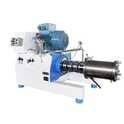
Before we discuss the grinding modes, let's first understand what a Disc Type Bead Mill is. A Disc Type Bead Mill is a high - energy grinding equipment used for size reduction and dispersion of various materials. It consists of a grinding chamber filled with grinding media (usually beads) and a series of discs attached to a rotating shaft. When the shaft rotates, the discs agitate the grinding media, creating a high - shear force that breaks down the particles in the material.
Wet Grinding with Disc Type Bead Mills
Wet grinding is the most common application of Disc Type Bead Mills. In wet grinding, the material to be ground is suspended in a liquid medium, such as water, solvent, or a mixture of both. The liquid serves several important functions. Firstly, it acts as a carrier for the material, allowing it to flow through the grinding chamber smoothly. Secondly, it helps to dissipate the heat generated during the grinding process, preventing overheating of the material and the mill. Thirdly, it can improve the dispersion of the ground particles, reducing the risk of agglomeration.
The advantages of wet grinding with a Disc Type Bead Mill are numerous. It can achieve very fine particle sizes, often in the sub - micron range. This makes it ideal for applications in industries such as paints, coatings, inks, pharmaceuticals, and cosmetics. For example, in the paint industry, a Paint Bead Mill can be used to grind pigments to a fine size, ensuring a smooth and uniform finish of the paint. The high - shear force generated by the rotating discs and grinding media can break down the pigment particles effectively, improving the color strength and hiding power of the paint.
Dry Grinding with Disc Type Bead Mills
Contrary to the common belief, a Disc Type Bead Mill can also be used for dry grinding. Dry grinding involves grinding the material without the use of a liquid medium. It is suitable for materials that are sensitive to moisture or for applications where a dry powder product is required.
However, dry grinding with a Disc Type Bead Mill presents some challenges. One of the main challenges is heat generation. Without the cooling effect of the liquid medium, the heat generated during the grinding process can accumulate quickly, leading to overheating of the material and the mill. This can cause thermal degradation of the material, especially for heat - sensitive substances. Another challenge is the risk of dust generation. Dry grinding can produce a large amount of dust, which can be a health hazard for the operators and can also cause environmental pollution.
To overcome these challenges, special design features are required in the Disc Type Bead Mill for dry grinding. For example, the mill may be equipped with a cooling jacket to dissipate the heat, and a dust collection system to capture the dust. Additionally, the grinding media and discs need to be carefully selected to ensure efficient grinding without excessive wear and tear.
Applications of Dry Grinding with Disc Type Bead Mills
Dry grinding with Disc Type Bead Mills has its own set of applications. In the ceramic industry, dry grinding is used to prepare ceramic powders for the production of tiles, bricks, and other ceramic products. The dry - ground powders can have a better flowability and packing density, which is beneficial for the subsequent forming processes. In the food industry, dry grinding can be used to grind spices, grains, and other food ingredients to produce fine powders.
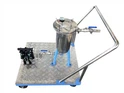
In the laboratory setting, a ESW - 750 Lab Scale Horizontal Bead Mill can be used for both wet and dry grinding experiments. Researchers can use it to study the grinding behavior of different materials under various conditions, which can provide valuable insights for industrial - scale production.


Conclusion
In conclusion, a Disc Type Bead Mill is not limited to wet grinding only. While wet grinding is the more common and widely used mode, dry grinding is also possible with appropriate design modifications and precautions. The choice between wet and dry grinding depends on the nature of the material, the desired product characteristics, and the specific application requirements.
As a supplier of Bead Mill, we offer a range of Disc Type Bead Mills that can be customized for both wet and dry grinding applications. Our team of experts can provide technical support and advice to help you select the most suitable mill for your needs. If you are interested in learning more about our Disc Type Bead Mills or have any questions regarding grinding applications, please feel free to contact us for further discussion and potential procurement.
References
- "Principles of Particle Technology" by Rhodes, M. J.
- "Industrial Mixing: Science and Practice" by Paul, E. L., Atiemo - Obeng, V. A., & Kresta, S. M.
- "Powder Technology Handbook" by Tanaka, M.