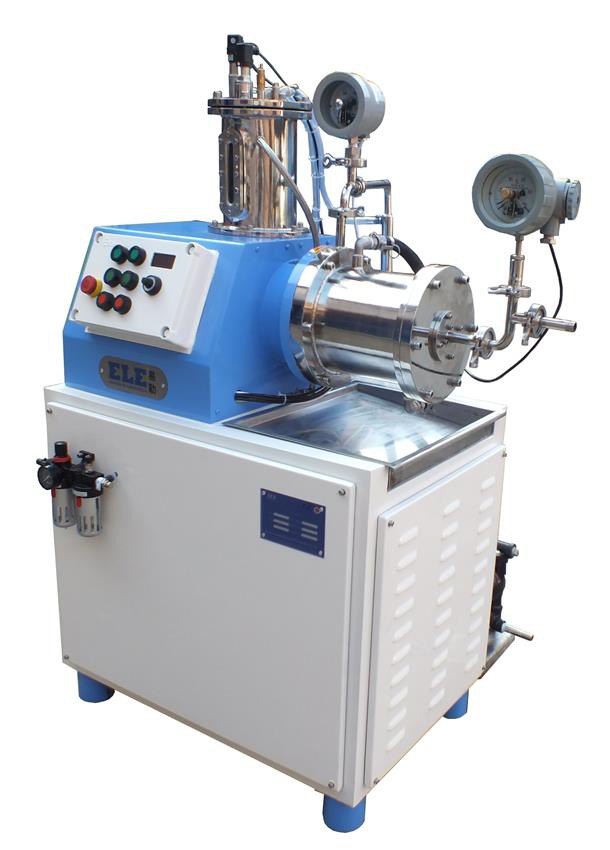
A disc type bead mill is a powerful tool in the field of material processing, known for its high - efficiency and precision in grinding and dispersing various materials. As a dedicated provider of disc type bead mills, I am excited to explore the diverse range of materials that can be processed using this remarkable equipment.
1. Ceramics
Ceramics are widely used in industries such as electronics, aerospace, and automotive. Disc type bead mills can effectively process ceramic materials to achieve the desired particle size and dispersion. For example, alumina ceramics are majorly used in the manufacture of electrical insulators and cutting tools. The disc type bead mill can break down the raw alumina powder into fine particles, which is crucial for the subsequent sintering process. The fine and uniformly dispersed particles ensure better mechanical properties and performance of the final ceramic products.
Zirconia ceramics, on the other hand, are known for their excellent toughness and high - temperature resistance. Processing zirconia materials with a disc type bead mill helps in achieving a narrow particle size distribution, which is essential for applications such as dental implants and advanced cutting ceramics. By carefully controlling the milling process parameters, such as the rotational speed of the discs and the type of grinding media, we can optimize the processing of zirconia to meet the strict quality requirements.
2. Paints and Coatings
Paints and coatings play a vital role in protecting and decorating various surfaces. A disc type bead mill is widely used in the paint and coating industry to disperse pigments and additives evenly. Pigments, such as titanium dioxide, are used to provide color and opacity to paints. However, these pigments tend to agglomerate, which can lead to poor color development and hiding power. The disc type bead mill overcomes this problem by applying high - shear forces to break up the agglomerates and disperse the pigment particles uniformly in the liquid medium.
Organic pigments are also commonly processed using disc type bead mills. These pigments are used to produce bright and vivid colors in paints, inks, and plastics. The ability of the disc type bead mill to achieve a high degree of dispersion ensures that the organic pigments exhibit excellent color performance and stability. Moreover, for coatings that require special effects, such as metallic or pearlescent coatings, the disc type bead mill can be used to process and disperse the corresponding additives, enhancing the visual appeal and functionality of the coatings.
3. Pharmaceuticals
In the pharmaceutical industry, the disc type bead mill is used to process a variety of materials, such as active pharmaceutical ingredients (APIs) and excipients. APIs need to be milled to a specific particle size to ensure their solubility, bioavailability, and stability. For example, poorly water - soluble drugs can benefit greatly from particle size reduction using a disc type bead mill. By reducing the particle size, the surface area of the drug is increased, which can improve its dissolution rate and ultimately enhance its therapeutic effect.
Excipients, which are used to formulate drug products, also undergo processing in disc type bead mills. These include materials such as fillers, binders, and lubricants. The milling process helps in ensuring uniform particle size and proper dispersion of excipients, which is crucial for the consistency and quality of the final drug products.

4. Minerals
Minerals are important raw materials in many industries, and the disc type bead mill is a valuable tool for their processing. For instance, kaolin, a type of clay mineral, is widely used in the paper, ceramics, and rubber industries. The disc type bead mill can be used to refine kaolin, reducing its particle size and improving its brightness and whiteness. This is important for applications where high - quality kaolin is required, such as in the production of coated paper.
Talc is another mineral that can be processed using a disc type bead mill. Talc is used in cosmetics, plastics, and pharmaceuticals. The milling process can modify the particle shape and size of talc, which affects its properties such as lubricity, absorbency, and flowability. By carefully controlling the milling conditions, we can produce talc products that meet the specific requirements of different industries.
5. Polymers and Plastics
Polymers and plastics are ubiquitous in modern life, and disc type bead mills can play an important role in their production and modification. For example, in the production of masterbatches, which are concentrated mixtures of pigments or additives in a polymer carrier, a disc type bead mill can be used to disperse the pigments or additives uniformly in the polymer matrix. This ensures consistent color and performance of the final plastic products.
Recycled plastics often require processing to improve their quality and performance. The disc type bead mill can be used to reduce the particle size of recycled plastics and break up any contaminants or agglomerates. This can enhance the mechanical properties of the recycled plastics and make them suitable for a wider range of applications.
Other Types of Bead Mills
In addition to the disc type bead mill, there are other types of bead mills available in the market, each with its own unique features and applications. The Bead Mill is a general term that encompasses various types of bead - based grinding and dispersing equipment. It provides a wide range of options for different material processing needs.
The Aluminum Dioxide Bead Mill is specifically designed for applications where high - hardness grinding media are required. Aluminum dioxide beads are known for their excellent wear resistance and high grinding efficiency, making them suitable for processing hard and abrasive materials.
The Turbo Type Bead Mill features a unique turbo - shaped rotor design, which can generate high - speed shear forces and intense turbulence. This type of bead mill is particularly effective for processing materials that require rapid and efficient dispersion, such as high - viscosity fluids and difficult - to - disperse pigments.
Conclusion and Call to Action
In conclusion, the disc type bead mill is a versatile and powerful piece of equipment that can process a wide range of materials, including ceramics, paints and coatings, pharmaceuticals, minerals, polymers, and plastics. Its ability to achieve fine particle size reduction and uniform dispersion makes it an essential tool in many industries.
If you are in need of a reliable disc type bead mill for your material processing requirements, or if you have any questions about the materials that can be processed or the operation of the equipment, please feel free to contact us for a detailed consultation. Our team of experts is ready to provide you with customized solutions tailored to your specific needs. We look forward to the opportunity to work with you and contribute to the success of your business.
References
- Smith, J. (2018). Principles of Material Processing. McGraw - Hill.
- Johnson, A. (2020). Handbook of Bead Milling Technology. Wiley.
- Brown, C. (2019). Applications of Particle Size Reduction in Various Industries. Elsevier.