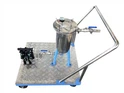
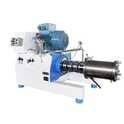
In the dynamic world of manufacturing, the ink production industry stands as a crucial pillar, supplying the vibrant colors and essential markings that adorn countless products across the globe. At the heart of this industry lies the ink production line, a complex and highly specialized system designed to transform raw materials into high-quality ink products efficiently and consistently. Among the many components that make up an ink production line, ink finishing equipment plays a pivotal role in ensuring the final product meets the stringent quality standards demanded by customers.
As a leading supplier of Ink Production Line, I have witnessed firsthand the transformative impact that advanced ink finishing equipment can have on a production line. In this blog post, I will delve into the various functions and benefits of ink finishing equipment, exploring how it contributes to the overall efficiency, quality, and profitability of an ink production operation.
Understanding Ink Finishing Equipment
Ink finishing equipment encompasses a range of machinery and processes designed to refine, enhance, and package ink products after the initial mixing and dispersion stages. This equipment is typically the last step in the ink production process, where the ink is fine-tuned to achieve the desired properties and characteristics before being packaged for distribution.
Some of the key types of ink finishing equipment commonly found in an ink production line include:
- Filtration Systems: Filtration is a critical step in ink finishing, as it removes any impurities, particles, or contaminants that may be present in the ink. This helps to improve the ink's clarity, smoothness, and printability, ensuring a consistent and high-quality finish. Filtration systems can range from simple mesh filters to more advanced membrane filters, depending on the specific requirements of the ink product.
- Agitation and Mixing Equipment: Even after the initial mixing and dispersion stages, ink may still require additional agitation and mixing to ensure a homogeneous and uniform product. Agitation and mixing equipment, such as high-speed stirrers, homogenizers, and ball mills, are used to break down any remaining agglomerates and ensure that the ink components are evenly distributed throughout the mixture.
- Color Matching and Adjustment Systems: Achieving the exact color and shade of ink required by customers is essential in the ink production industry. Color matching and adjustment systems, such as spectrophotometers and colorimeters, are used to measure and analyze the color of the ink, allowing operators to make precise adjustments to the pigment and dye concentrations to achieve the desired color match.
- Viscosity and Rheology Control Equipment: The viscosity and rheology of ink play a crucial role in its performance and printability. Viscosity and rheology control equipment, such as viscometers and rheometers, are used to measure and adjust the ink's viscosity and flow properties, ensuring that it has the right consistency for the intended application.
- Packaging Equipment: Once the ink has been finished and tested, it is ready to be packaged for distribution. Packaging equipment, such as filling machines, capping machines, and labeling machines, are used to fill the ink into containers, seal them, and apply labels and other packaging materials.
The Role of Ink Finishing Equipment in a Production Line
Now that we have a better understanding of what ink finishing equipment is, let's explore the specific roles and benefits it plays in an ink production line.
Ensuring Product Quality
One of the primary functions of ink finishing equipment is to ensure the final product meets the highest quality standards. By removing impurities, ensuring a homogeneous mixture, and achieving the exact color and viscosity required, ink finishing equipment helps to produce ink products that are consistent, reliable, and free from defects. This not only enhances the reputation of the ink manufacturer but also ensures customer satisfaction and loyalty.
Improving Production Efficiency
Ink finishing equipment can also significantly improve the efficiency of an ink production line. By automating many of the manual processes involved in ink finishing, such as filtration, mixing, and color matching, ink finishing equipment can reduce labor costs, increase production speeds, and minimize the risk of human error. This allows ink manufacturers to produce more ink products in less time, increasing their overall productivity and profitability.
Enhancing Product Performance
The quality of the ink finishing process can have a direct impact on the performance of the ink product. By ensuring a smooth and consistent finish, ink finishing equipment can improve the ink's printability, adhesion, and durability, resulting in better print quality and longer-lasting prints. This is particularly important in applications where the ink is exposed to harsh environmental conditions or requires a high level of resistance to abrasion, chemicals, or UV light.


Meeting Regulatory Requirements
In the ink production industry, there are strict regulatory requirements governing the quality and safety of ink products. Ink finishing equipment can help ink manufacturers meet these requirements by ensuring that the ink is free from harmful substances, such as heavy metals, solvents, and volatile organic compounds (VOCs). By using advanced filtration and purification techniques, ink finishing equipment can remove these contaminants from the ink, ensuring that it complies with all relevant regulations and standards.
The Importance of Choosing the Right Ink Finishing Equipment
Choosing the right ink finishing equipment for your ink production line is crucial to ensuring the success of your operation. When selecting ink finishing equipment, it is important to consider the following factors:
- Product Requirements: The specific requirements of your ink product, such as its viscosity, color, and intended application, will determine the type and specifications of the ink finishing equipment you need. Make sure to choose equipment that is capable of handling the specific properties and characteristics of your ink product.
- Production Capacity: The production capacity of your ink production line will also influence your choice of ink finishing equipment. Make sure to choose equipment that can handle the volume of ink you need to produce, while also allowing for future growth and expansion.
- Quality and Reliability: The quality and reliability of the ink finishing equipment you choose will have a direct impact on the quality and consistency of your ink products. Make sure to choose equipment from a reputable manufacturer with a proven track record of producing high-quality and reliable equipment.
- Ease of Use and Maintenance: Ink finishing equipment should be easy to use and maintain, with clear instructions and user-friendly interfaces. This will help to minimize downtime and ensure that your production line runs smoothly and efficiently.
- Cost and Return on Investment: Finally, it is important to consider the cost of the ink finishing equipment and the potential return on investment. While it may be tempting to choose the cheapest option available, it is important to remember that quality and reliability are often more important in the long run. Make sure to choose equipment that offers the best value for your money, taking into account the initial purchase price, operating costs, and potential savings in labor and production time.
Conclusion
In conclusion, ink finishing equipment plays a vital role in the ink production industry, ensuring the quality, efficiency, and performance of ink products. By removing impurities, ensuring a homogeneous mixture, achieving the exact color and viscosity required, and improving the ink's printability and durability, ink finishing equipment helps to produce high-quality ink products that meet the stringent requirements of customers across the globe.
As a leading supplier of Ink Production Line, we understand the importance of choosing the right ink finishing equipment for your operation. That's why we offer a wide range of high-quality ink finishing equipment, including filtration systems, agitation and mixing equipment, color matching and adjustment systems, viscosity and rheology control equipment, and packaging equipment, all designed to meet the specific needs and requirements of your ink production line.
If you are interested in learning more about our ink finishing equipment or would like to discuss your specific ink production requirements, please contact us today. Our team of experienced sales and technical experts will be happy to assist you in choosing the right equipment for your operation and providing you with the support and guidance you need to ensure the success of your ink production line.
References
- Smith, J. (2020). Ink Production Technology. New York: Wiley.
- Jones, A. (2019). The Science of Ink: A Comprehensive Guide. London: Elsevier.
- Brown, C. (2018). Ink Manufacturing and Quality Control. Chicago: American Printing House.