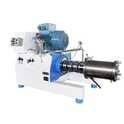
The material of the grinding chamber in a Dyes Pigment Bead Mill plays a pivotal role in determining the quality of the final product. As a leading supplier of Dyes Pigment Bead Mills, we understand the significance of this factor and have extensive knowledge and experience in this field. In this blog, we will explore how the material of the grinding chamber impacts product quality and why it is crucial to choose the right material for your specific application.
Understanding the Role of the Grinding Chamber
The grinding chamber is the heart of a Dyes Pigment Bead Mill. It is where the grinding media, such as beads, collide with the pigment particles to reduce their size and disperse them evenly in the liquid medium. The material of the grinding chamber directly affects the efficiency of this process and the quality of the resulting pigment dispersion.
Wear Resistance
One of the primary considerations when choosing the material for the grinding chamber is its wear resistance. During the grinding process, the grinding media and the pigment particles constantly rub against the walls of the grinding chamber. If the material is not wear-resistant, it will gradually erode, leading to contamination of the product and a decrease in grinding efficiency.
For example, in applications where high abrasive pigments are used, such as titanium dioxide, a grinding chamber made of a hard and wear-resistant material like zirconia is often preferred. Zirconia has excellent wear resistance properties, which can withstand the high abrasion caused by the pigment particles and the grinding media. This ensures that the grinding chamber remains intact for a longer period, reducing the risk of contamination and maintaining the quality of the product.
On the other hand, if a less wear-resistant material is used, such as stainless steel, it may wear out quickly, especially when grinding highly abrasive pigments. This can result in metal particles being released into the product, which can affect its color, purity, and performance. Therefore, for applications where wear resistance is a critical factor, it is essential to choose a grinding chamber made of a suitable material.
Chemical Resistance
In addition to wear resistance, the chemical resistance of the grinding chamber material is also crucial. The pigment dispersion often contains various chemicals, such as solvents, surfactants, and additives, which can react with the material of the grinding chamber. If the material is not chemically resistant, it may corrode or dissolve, leading to contamination of the product and a change in its properties.
For instance, in applications where acidic or alkaline pigments are used, a grinding chamber made of a chemically resistant material like ceramic or plastic is often recommended. Ceramic materials, such as alumina and silicon carbide, have excellent chemical resistance properties and can withstand the corrosive effects of acids and alkalis. Plastic materials, such as polyethylene and polypropylene, are also chemically resistant and can be used in applications where a non-metallic and lightweight grinding chamber is required.
In contrast, if a material with poor chemical resistance is used, such as carbon steel, it may corrode when exposed to acidic or alkaline pigments. This can result in rust and other contaminants being introduced into the product, which can affect its quality and performance. Therefore, it is important to consider the chemical nature of the pigment dispersion and choose a grinding chamber material that is compatible with it.
Impact on Product Purity
The material of the grinding chamber can also have a significant impact on the purity of the final product. As mentioned earlier, if the grinding chamber material wears out or corrodes, it can release particles into the product, which can affect its purity and quality.
For example, in applications where high-purity pigments are required, such as in the pharmaceutical and food industries, a grinding chamber made of a clean and non-contaminating material is essential. Materials like glass and high-purity ceramics are often used in these applications because they have low levels of impurities and do not release any harmful substances into the product.
In addition, the surface finish of the grinding chamber can also affect the purity of the product. A smooth and polished surface can prevent the accumulation of pigment particles and contaminants, making it easier to clean the grinding chamber and maintain the purity of the product.
Influence on Grinding Efficiency
The material of the grinding chamber can also influence the grinding efficiency of the Dyes Pigment Bead Mill. A grinding chamber made of a suitable material can provide a more efficient grinding environment, resulting in faster particle size reduction and better dispersion of the pigment particles.
For example, a grinding chamber with a high coefficient of friction can increase the contact between the grinding media and the pigment particles, leading to more effective grinding. Materials like rubber and polyurethane are often used in the lining of grinding chambers to increase the friction and improve the grinding efficiency.
On the other hand, a grinding chamber with a low coefficient of friction may result in less effective grinding, as the grinding media may slide over the pigment particles without sufficient contact. Therefore, it is important to choose a grinding chamber material that has the appropriate coefficient of friction for the specific application.
Choosing the Right Material for Your Application
When choosing the material for the grinding chamber in a Dyes Pigment Bead Mill, it is important to consider several factors, including the type of pigment, the grinding media, the chemical nature of the pigment dispersion, and the desired product quality.
For applications where high abrasive pigments are used, such as Bead Mill For Titanium Dioxide, a wear-resistant material like zirconia or ceramic is often recommended. For applications where acidic or alkaline pigments are used, a chemically resistant material like ceramic or plastic is preferred. For applications where high-purity pigments are required, a clean and non-contaminating material like glass or high-purity ceramics is essential.
In addition, it is also important to consider the cost and availability of the material. Some materials, such as zirconia, can be more expensive than others, but they may offer better performance and longer service life. Therefore, it is necessary to balance the cost and performance requirements when choosing the material for the grinding chamber.
Conclusion
In conclusion, the material of the grinding chamber in a Dyes Pigment Bead Mill has a significant impact on the product quality. It affects the wear resistance, chemical resistance, product purity, and grinding efficiency of the mill. By choosing the right material for the grinding chamber, you can ensure that your pigment dispersion has the desired quality, performance, and purity.


As a supplier of Dyes Pigment Bead Mills, we offer a wide range of grinding chamber materials to meet the diverse needs of our customers. Whether you are looking for a wear-resistant material for grinding high abrasive pigments, a chemically resistant material for acidic or alkaline pigments, or a clean and non-contaminating material for high-purity applications, we have the solution for you.
If you are interested in learning more about our Dyes Pigment Bead Mills and the different grinding chamber materials we offer, please feel free to contact us for a consultation. Our team of experts will be happy to assist you in choosing the right mill and grinding chamber material for your specific application.
References
- "Principles of Pigment Dispersion" by John Wiley & Sons.
- "Handbook of Grinding Technology" by Marcel Dekker.
- "Advanced Materials for Grinding Applications" by Elsevier.