Hey there! As a supplier of Pin Type Bead Mills, I've gotten a lot of questions about how different factors affect the grinding performance. One question that comes up quite often is about the effect of the pin gap on the grinding performance in a Pin Type Bead Mill. So, let's dive right into it!
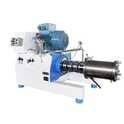
First off, what's a Pin Type Bead Mill? Well, it's a super - useful piece of equipment in the grinding and dispersing game. It uses pins to agitate beads in a chamber, and these beads then break down the particles of the material you're trying to grind. Whether you're working with inks, pesticides, or other materials, a Bead Mill can be a real game - changer.
Now, let's talk about the pin gap. The pin gap is the distance between the pins in the mill. It might seem like a small detail, but it can have a huge impact on how well the mill performs.
Particle Size Reduction
One of the main goals of using a Pin Type Bead Mill is to reduce the particle size of the material. The pin gap plays a crucial role here. When the pin gap is small, the beads have less space to move around. This means that they're more likely to come into contact with the particles, leading to more efficient particle breakage.
For example, if you're using a mill to grind pigments for an Ink Bead Mill, a smaller pin gap can help you achieve a finer particle size. This is important because finer particles can lead to better color quality, smoother ink flow, and better print results. On the other hand, if the pin gap is too large, the beads might not interact with the particles as effectively, and you might end up with larger particles in your final product.
Energy Consumption
Another aspect affected by the pin gap is energy consumption. A smaller pin gap generally requires more energy to operate. Why? Well, when the space between the pins is small, the beads have to work harder to move through the mill. This increased resistance means that the motor has to work harder, which in turn consumes more energy.
However, it's not all bad news. The increased energy can lead to better grinding performance, as we saw with the particle size reduction. So, it's a bit of a trade - off. If you're willing to pay a bit more for energy, you can get a more finely ground product. But if energy costs are a major concern for you, you might want to consider a slightly larger pin gap.
Bead Wear
Bead wear is also influenced by the pin gap. When the pin gap is small, the beads are more likely to rub against each other and the pins. This increased friction can cause the beads to wear down more quickly. This is a problem because worn - out beads are less effective at grinding, and you'll have to replace them more often.
On the other hand, a larger pin gap can reduce bead wear. The beads have more space to move around, so there's less friction between them and the pins. But again, there's a trade - off. As we mentioned earlier, a larger pin gap might not be as effective at reducing particle size.
Throughput
Throughput, or the amount of material that can be processed in a given time, is yet another factor affected by the pin gap. A larger pin gap generally allows for a higher throughput. Since there's more space between the pins, the material can flow through the mill more easily.
This is great if you need to process a large amount of material quickly. For instance, if you're using a Pesticide SC Bead Mill to produce a large batch of pesticide, a larger pin gap can help you get the job done faster. However, if you're more concerned about achieving a very fine particle size, a smaller pin gap might be worth sacrificing some throughput for.


How to Choose the Right Pin Gap
So, how do you decide what pin gap is right for your application? Well, it depends on a few things. First, think about the material you're grinding. If it's a tough material that needs a lot of force to break down, a smaller pin gap might be better. But if it's a softer material, you might be able to get away with a larger pin gap.
Next, consider your end - product requirements. If you need a very fine particle size, a smaller pin gap is probably the way to go. But if you're more concerned about throughput or energy consumption, you might want to choose a larger pin gap.
It's also a good idea to do some testing. You can try different pin gaps and see how they affect the grinding performance, particle size, energy consumption, and bead wear. This hands - on approach can give you a better idea of what works best for your specific situation.
Conclusion
In conclusion, the pin gap in a Pin Type Bead Mill has a significant impact on the grinding performance. It affects particle size reduction, energy consumption, bead wear, and throughput. As a supplier, I've seen firsthand how choosing the right pin gap can make a big difference in the quality of the final product and the efficiency of the grinding process.
If you're in the market for a Pin Type Bead Mill or if you have any questions about how to optimize the pin gap for your application, don't hesitate to reach out. We're here to help you make the best decision for your business. Whether you're looking for an Ink Bead Mill or a Pesticide SC Bead Mill, we've got the expertise to guide you.
References
- Some general literature on bead mill technology
- Industry reports on the performance of Pin Type Bead Mills
- Internal research and testing data from our company's experience in supplying Pin Type Bead Mills