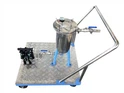
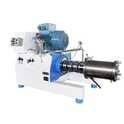
As a supplier of Laboratory Basket Mills, I've encountered a wide range of issues that users face during the operation of these machines. In this blog, I'll share some practical tips on how to troubleshoot common problems of the Laboratory Basket Mill, ensuring smooth and efficient operation for your laboratory or production needs.
1. Insufficient Dispersion Quality
One of the most common problems users encounter is insufficient dispersion quality. This can manifest as uneven particle size distribution in the dispersed material, which may affect the final product's quality.


Possible Causes
- Worn Grinding Media: Over time, the grinding media in the basket mill can wear out. Worn media may not be able to effectively break down the particles, leading to poor dispersion results.
- Incorrect Basket Speed: If the basket speed is too low, the grinding media may not have enough kinetic energy to break the particles. On the other hand, if the speed is too high, it may cause excessive heat generation and even damage to the mill.
- Inadequate Grinding Time: Insufficient grinding time can also result in incomplete dispersion. The material may not have enough time to be thoroughly processed by the grinding media.
Troubleshooting Steps
- Check and Replace Grinding Media: Regularly inspect the grinding media for signs of wear. If they are worn beyond a certain limit, replace them with new ones. Different types of grinding media, such as ceramic or steel balls, have different wear characteristics and should be selected based on the specific application.
- Adjust Basket Speed: Refer to the mill's manual to determine the optimal basket speed for your material. You can start with a lower speed and gradually increase it while monitoring the dispersion quality. Make sure to stay within the recommended speed range to avoid damage to the mill.
- Increase Grinding Time: If the dispersion quality is still poor after adjusting the speed and media, try increasing the grinding time. However, be careful not to over - grind the material, as this can also have negative effects on the product.
2. Excessive Noise and Vibration
Excessive noise and vibration during the operation of the Laboratory Basket Mill can be a sign of underlying problems.
Possible Causes
- Imbalanced Basket: If the basket is not properly balanced, it can cause significant vibration and noise. This may be due to uneven distribution of the grinding media or material inside the basket.
- Loose Components: Loose bolts, nuts, or other components can also lead to vibration and noise. Over time, the constant movement of the mill can cause these components to loosen.
- Worn Bearings: Bearings are crucial for the smooth operation of the mill. Worn bearings can cause increased friction, resulting in noise and vibration.
Troubleshooting Steps
- Balance the Basket: Ensure that the grinding media and material are evenly distributed inside the basket. You may need to stop the mill and re - arrange the contents if necessary.
- Tighten Loose Components: Inspect all the bolts, nuts, and other fasteners regularly. Use a torque wrench to tighten them to the recommended torque values.
- Replace Worn Bearings: If you suspect that the bearings are worn, replace them as soon as possible. It's important to use high - quality bearings that are compatible with your mill to ensure long - term performance.
3. Overheating
Overheating is another common problem that can affect the performance and lifespan of the Laboratory Basket Mill.
Possible Causes
- High Friction: Excessive friction between the grinding media, the basket, and the material can generate a large amount of heat. This can be caused by incorrect basket speed, worn components, or improper lubrication.
- Poor Ventilation: If the mill is located in an area with poor ventilation, the heat generated during operation cannot be effectively dissipated, leading to overheating.
- Overloading: Running the mill with too much material or at a higher capacity than it is designed for can also cause overheating.
Troubleshooting Steps
- Reduce Friction: Check the basket speed and make sure it is within the recommended range. Inspect the components for wear and replace any worn parts. Ensure that all moving parts are properly lubricated according to the manufacturer's instructions.
- Improve Ventilation: Make sure the mill has enough space around it for proper air circulation. You can also consider installing additional ventilation equipment, such as fans, to help dissipate the heat.
- Avoid Overloading: Refer to the mill's specifications to determine its maximum capacity. Do not exceed this capacity to prevent overheating.
4. Leakage
Leakage of the material being processed can be a messy and wasteful problem.
Possible Causes
- Damaged Seals: Seals are used to prevent the leakage of the material from the mill. Over time, these seals can wear out or become damaged, allowing the material to escape.
- Loose Connections: Loose pipes, fittings, or other connections can also cause leakage. The constant vibration of the mill can cause these connections to loosen.
- Cracks in the Basket or Housing: Cracks in the basket or the housing of the mill can provide a pathway for the material to leak out.
Troubleshooting Steps
- Replace Damaged Seals: Inspect the seals regularly and replace any damaged ones. Make sure to use seals that are compatible with your mill and the material being processed.
- Tighten Loose Connections: Check all the pipes, fittings, and other connections and tighten them as needed. You may need to use thread sealant to ensure a proper seal.
- Repair or Replace Cracked Components: If you find cracks in the basket or the housing, assess the severity of the damage. Minor cracks may be repaired, but in some cases, it may be necessary to replace the entire component.
5. Electrical Problems
Electrical problems can prevent the Laboratory Basket Mill from operating properly or even pose a safety hazard.
Possible Causes
- Faulty Wiring: Damaged or loose wiring can cause electrical shorts, which can lead to malfunctions or even fires.
- Defective Motor: A defective motor can cause the mill to stop working or operate at an incorrect speed.
- Tripped Circuit Breaker: If the mill draws too much current, it can cause the circuit breaker to trip, cutting off the power supply.
Troubleshooting Steps
- Inspect the Wiring: Carefully examine the wiring for any signs of damage, such as frayed wires or loose connections. If you find any problems, repair or replace the wiring by a qualified electrician.
- Test the Motor: Use appropriate electrical testing equipment to check the motor's performance. If the motor is defective, it may need to be repaired or replaced.
- Reset the Circuit Breaker: If the circuit breaker has tripped, first identify the cause of the overcurrent. Make sure the mill is not overloaded or experiencing any electrical faults. Then, reset the circuit breaker and restart the mill.
In conclusion, troubleshooting common problems of the Laboratory Basket Mill requires a systematic approach. By identifying the possible causes and following the appropriate troubleshooting steps, you can ensure the smooth and efficient operation of your mill. If you encounter any problems that you are unable to solve, do not hesitate to contact us. As a professional supplier of Laboratory Basket Mill, we have a team of experts who can provide you with technical support and guidance. Whether you need a Basket Mill For Pigment Dispersion or a Paint Basket Mill, we can offer you high - quality products and excellent after - sales service. If you are interested in our products or have any questions, please feel free to contact us for procurement and further discussions.
References
- Manufacturer's Manuals for Laboratory Basket Mills
- Industry Standards and Guidelines for Grinding and Dispersion Equipment