Hey there! As a filter supplier in the industry, I often get asked about different types of filters and their applications. One that comes up quite frequently is the Wiener filter. So, let's dive right in and talk about what a Wiener filter is in signal processing.
Understanding the Basics
First off, what's a signal? In simple terms, a signal is any kind of information that varies over time or space. It can be an audio signal like music, a video signal, or even data from a sensor. But in the real world, these signals are almost always corrupted by noise. Noise is unwanted random variations that mess up the original signal, making it less clear and accurate.
That's where the Wiener filter steps in. It's a type of filter that's designed to reduce the noise in a signal while keeping the important parts of the original signal intact. It was developed by Norbert Wiener during World War II, mainly for improving radar signals. The basic idea behind the Wiener filter is to find the best linear filter that minimizes the mean - square error between the original signal and the filtered signal.
How Does It Work?
The Wiener filter works by using some statistical properties of the signal and the noise. It needs to know the power spectra of the original signal and the noise. The power spectrum tells us how the power of a signal is distributed across different frequencies.
Here's a simple way to think about it. Imagine you're trying to clean a dirty painting. You know what the clean painting should generally look like (that's like the power spectrum of the original signal), and you also know the pattern of the dirt on it (the power spectrum of the noise). The Wiener filter uses this information to figure out how to "clean" the painting (filter the signal) in the best possible way.
Mathematically, the frequency - domain representation of the Wiener filter is given by:
[H_{wiener}(f)=\frac{S_{ss}(f)}{S_{ss}(f)+S_{nn}(f)}]
where (H_{wiener}(f)) is the transfer function of the Wiener filter at frequency (f), (S_{ss}(f)) is the power spectral density of the original signal, and (S_{nn}(f)) is the power spectral density of the noise.

The transfer function tells us how the filter will respond to different frequencies. If the signal power at a certain frequency is much higher than the noise power ((S_{ss}(f)\gg S_{nn}(f))), then (H_{wiener}(f)\approx1), which means the filter will pass the signal at that frequency almost unchanged. On the other hand, if the noise power is much higher than the signal power ((S_{nn}(f)\gg S_{ss}(f))), then (H_{wiener}(f)\approx0), and the filter will block that frequency.
Applications of the Wiener Filter
The Wiener filter has a wide range of applications in different fields.
Audio Processing
In audio, it can be used to remove background noise from a recording. For example, if you're recording a podcast in a noisy environment, the Wiener filter can help clean up the audio and make your voice clearer. It can also be used in audio restoration, where old recordings with crackling and hissing noises can be improved.
Image Processing
In images, noise can make them look grainy and reduce their quality. The Wiener filter can be applied to reduce this noise. For instance, in medical imaging like X - rays or MRIs, noise reduction is crucial for accurate diagnosis. The Wiener filter can enhance the clarity of these images, making it easier for doctors to spot abnormalities.
Communication Systems
In communication, signals are often corrupted by noise as they travel through a channel. The Wiener filter can be used at the receiver end to remove this noise and improve the quality of the received signal. This is especially important in wireless communication systems, where stronger signals are prone to interference.
Our Filters and Related Products
As a filter supplier, we understand the importance of high - quality filters in signal processing. We offer a wide range of filters, including those that can be customized to meet your specific needs for Wiener - like filtering applications.
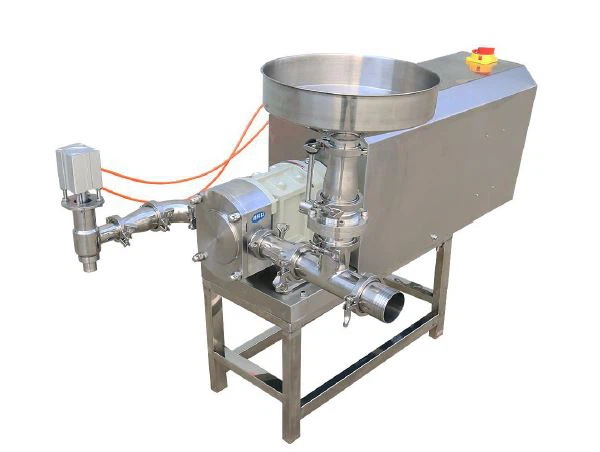
In addition to our filters, we also have some great related products that might interest you. For example, we have the Rotary Pump Filling Machine. This machine is perfect for filling filters with various substances in a precise and efficient manner.
Another product worth checking out is the EGL - 4 Automatically Filling machine for 0.4~4L. It's designed to handle different volumes of filling, ensuring that your filters are filled accurately every time. And if you're looking for a more general solution, our Filling Machine can be a great option.
When to Use the Wiener Filter
The Wiener filter is most effective when you have a good estimate of the power spectra of the signal and the noise. If you don't have this information, it can be difficult to design an optimal Wiener filter. Also, it assumes that the signal and the noise are stationary, which means their statistical properties don't change over time. In real - world scenarios, this might not always be true. But in many cases where the non - stationarity is not too severe, the Wiener filter can still provide good results.
Limitations
Like any other tool, the Wiener filter has its limitations. One major limitation is that it requires knowledge of the power spectra of the signal and the noise. In practice, getting an accurate estimate of these spectra can be challenging. Also, the Wiener filter is a linear filter. In some cases, non - linear filtering techniques might be more suitable, especially when dealing with highly non - linear signals or noise.
Contact Us for Your Filter Needs
If you're looking for high - quality filters for your signal processing applications, we're here to help. Whether you need a filter for audio, image, or communication systems, our team can work with you to find the best solution. And if you're interested in our filling machines, we can provide detailed information and support.
We're not just a supplier; we're your partner in ensuring the success of your projects. Don't hesitate to reach out and start a conversation about your specific requirements. We look forward to working with you to fulfill all your filter - related needs.
References
- Oppenheim, A. V., & Schafer, R. W. (2010). Discrete - Time Signal Processing. Pearson Prentice Hall.
- Wiener, N. (1949). Extrapolation, Interpolation and Smoothing of Stationary Time Series. MIT Press.