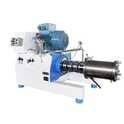
Is a laboratory bead mill suitable for a small - sized laboratory?
In the realm of scientific research and experimentation, small - sized laboratories often face unique challenges when it comes to selecting the right equipment. One such piece of equipment that has gained significant attention is the laboratory bead mill. As a supplier of laboratory bead mills, I am well - positioned to explore whether this tool is a suitable addition to a small - sized laboratory.
Understanding the Laboratory Bead Mill
A laboratory bead mill is a powerful device used for the grinding, dispersing, and homogenizing of various materials. It operates on the principle of using small beads (usually made of materials like zirconia, glass, or ceramic) to break down particles through high - energy collisions. The materials to be processed are placed in a chamber along with the beads, and as the mill rotates, the beads move around, causing the fragmentation of the particles in the sample.
Advantages of Laboratory Bead Mills for Small - Sized Laboratories
Space Efficiency
Small - sized laboratories typically have limited space. Laboratory bead mills are often compact in design, making them an ideal fit for these confined areas. Unlike some large - scale industrial mills, they can be easily placed on a laboratory bench or in a small storage area when not in use. This space - saving feature allows small laboratories to optimize their available space without sacrificing the ability to perform high - quality grinding and dispersion tasks.
Cost - Effectiveness
For small laboratories with tight budgets, cost is a crucial factor. Laboratory bead mills offer a cost - effective solution compared to larger, more complex milling equipment. They generally require less initial investment and also have lower operating costs. The energy consumption of a laboratory bead mill is relatively low, and the maintenance requirements are not as extensive as those of larger industrial mills. Additionally, the cost of the beads used in the mill is relatively affordable, and they can be reused multiple times, further reducing the overall cost of operation.


Versatility
One of the most significant advantages of laboratory bead mills is their versatility. They can be used to process a wide range of materials, including but not limited to polymers, pigments, pharmaceuticals, and Bead Mill For Nano Fertilizer. This means that a small - sized laboratory can use a single bead mill for multiple research projects, eliminating the need to purchase multiple specialized pieces of equipment. Whether it's preparing samples for microscopy, formulating new products, or conducting research on nanomaterials, the laboratory bead mill can handle a variety of tasks with ease.
Precision and Reproducibility
In scientific research, precision and reproducibility are of utmost importance. Laboratory bead mills are designed to provide highly precise and reproducible results. The parameters of the milling process, such as the speed of rotation, the size and type of beads used, and the duration of milling, can be carefully controlled. This allows researchers in small laboratories to obtain consistent results across multiple experiments, which is essential for validating research findings and ensuring the reliability of data.
Challenges of Using Laboratory Bead Mills in Small - Sized Laboratories
Throughput Limitations
One of the main challenges of using a laboratory bead mill in a small - sized laboratory is the relatively low throughput. Due to their small size, laboratory bead mills can only process a limited amount of material at a time. This can be a drawback when large - scale production or high - volume sample processing is required. However, for most small - scale research projects, the throughput of a laboratory bead mill is usually sufficient. Researchers can simply run multiple batches to achieve the desired amount of processed material.
Noise and Vibration
Laboratory bead mills can generate a certain amount of noise and vibration during operation. In a small - sized laboratory, where researchers are often working in close proximity to the equipment, this can be a nuisance. However, many modern laboratory bead mills are designed with noise - reducing features and vibration dampening mechanisms. By choosing a high - quality bead mill, small laboratories can minimize the impact of noise and vibration on the working environment.
Applications in Small - Sized Laboratories
Material Science Research
In material science, small laboratories often conduct research on the development of new materials or the improvement of existing ones. Laboratory bead mills can be used to grind and disperse raw materials to create homogeneous mixtures, which is crucial for the synthesis of advanced materials. For example, in the research of nanocomposites, the bead mill can be used to disperse nanoparticles uniformly in a polymer matrix. This process can enhance the mechanical, electrical, and thermal properties of the composite material.
Pharmaceutical Research
Pharmaceutical research in small laboratories often involves the development of new drug formulations. Laboratory bead mills can be used to reduce the particle size of active pharmaceutical ingredients (APIs), which can improve the solubility and bioavailability of the drugs. By using a Nano Grinding Mill, researchers can achieve the desired particle size distribution for optimal drug performance. Additionally, the bead mill can be used to disperse excipients in the formulation, ensuring a uniform and stable product.
Environmental Science
In environmental science, small laboratories may be involved in analyzing soil, water, or air samples. Laboratory bead mills can be used to extract and prepare samples for analysis. For example, in the study of contaminants in soil, the bead mill can be used to break down soil particles and release the contaminants for further analysis. This can help researchers understand the distribution and behavior of pollutants in the environment.
Conclusion
In conclusion, a laboratory bead mill is a highly suitable piece of equipment for small - sized laboratories. Its space - saving design, cost - effectiveness, versatility, precision, and reproducibility make it an attractive option for a wide range of research applications. While there are some challenges, such as throughput limitations and noise, these can be managed with proper equipment selection and operational strategies.
If you are operating a small - sized laboratory and are considering adding a laboratory bead mill to your equipment inventory, I encourage you to contact us for more information. Our team of experts can provide you with detailed product specifications, technical support, and pricing information. We are committed to helping you find the best solution for your laboratory's needs. Whether you are interested in a Bead Mill For Nano Fertilizer, a Sand Mill For Kaolin, or a Nano Grinding Mill, we have a wide range of products to meet your requirements. Don't hesitate to reach out to us to start a discussion about how our laboratory bead mills can enhance your research capabilities.
References
- "Principles of Particle Technology" by Allen, T.
- "Handbook of Pharmaceutical Granulation Technology" by Aulton, M. E.
- "Materials Science and Engineering: An Introduction" by Callister, W. D., & Rethwisch, D. G.