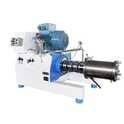
As a supplier of Pin Type Bead Mills, I am frequently asked whether this type of mill can be used for wet grinding. The answer is a resounding yes, and in this blog post, I'll delve into the details of why Pin Type Bead Mills are well - suited for wet grinding applications, their advantages, and some key considerations.
The Basics of Wet Grinding
Wet grinding is a process in which a solid material is dispersed and reduced in size within a liquid medium. This method has several benefits compared to dry grinding. For instance, it can achieve finer particle sizes, and the liquid medium helps to dissipate heat generated during the grinding process, preventing overheating and potential damage to the material. Additionally, wet grinding can improve the dispersion of the particles, leading to a more homogeneous final product.
Pin Type Bead Mills: A Perfect Fit for Wet Grinding
Pin Type Bead Mills are specifically designed to be highly effective in wet grinding operations. The principle behind these mills is based on the high - speed rotation of a shaft equipped with pins. These pins agitate the grinding media (usually beads made of materials like zirconia, glass, or ceramic) and the material to be ground within a grinding chamber.


The high - energy impact and shearing forces generated by the rotating pins and moving beads break down the solid particles in the liquid suspension. As the pins spin at high speeds, they create a turbulent flow within the grinding chamber. This turbulent flow ensures that the grinding media and the material are constantly in motion, increasing the probability of particle - bead collisions. Each collision results in the reduction of particle size.
Advantages of Using Pin Type Bead Mills for Wet Grinding
1. High Grinding Efficiency
Pin Type Bead Mills can achieve very high grinding efficiencies. The design allows for a large number of collisions between the grinding media and the particles in a short period. This means that the material can be ground to the desired particle size quickly, reducing processing time and increasing productivity. For example, in industries where large volumes of materials need to be processed, such as the production of Bead Mill For Nano Fertilizer, the high - efficiency grinding provided by pin type bead mills is crucial.
2. Fine Particle Size Distribution
One of the key requirements in many wet grinding applications is achieving a narrow and fine particle size distribution. Pin Type Bead Mills excel in this aspect. The precise control of the grinding parameters, such as the speed of the pins, the size of the grinding media, and the flow rate of the material, allows for the production of particles with a very narrow size range. This is essential in industries like ink production, where a consistent particle size is necessary for the quality of the final Ink Bead Mill product.
3. Versatility
Pin Type Bead Mills can handle a wide range of materials in wet grinding applications. They can process both soft and hard materials, from polymers and pigments to minerals and metals. The ability to adjust the grinding conditions makes them suitable for different industries, including pharmaceuticals, cosmetics, and food processing.
4. Heat Dissipation
As mentioned earlier, heat generation during grinding can be a problem. However, in wet grinding with Pin Type Bead Mills, the liquid medium acts as a coolant. The continuous flow of the liquid through the grinding chamber helps to carry away the heat generated by the grinding process. This prevents the material from overheating, which could otherwise lead to chemical reactions, degradation of the material, or changes in its physical properties.
Key Considerations When Using Pin Type Bead Mills for Wet Grinding
1. Selection of Grinding Media
The choice of grinding media is crucial for the success of wet grinding with a Pin Type Bead Mill. The size, density, and hardness of the media will affect the grinding efficiency and the final particle size. For example, smaller beads are generally used for achieving finer particle sizes, while larger beads can be more effective for initial coarse grinding. The density of the media also plays a role; higher - density media can generate more impact energy during collisions.
2. Flow Rate and Residence Time
The flow rate of the material through the grinding chamber and the residence time of the particles in the chamber are important parameters. A proper balance needs to be struck between the two. If the flow rate is too high, the particles may not have enough time to be adequately ground. On the other hand, if the flow rate is too low, it may lead to over - grinding and increased energy consumption.
3. Maintenance
Regular maintenance of the Pin Type Bead Mill is essential to ensure its optimal performance. This includes checking and replacing worn - out pins, monitoring the condition of the grinding chamber, and ensuring the proper functioning of the seals and bearings. Proper maintenance can extend the lifespan of the mill and prevent costly breakdowns.
Applications of Pin Type Bead Mills in Wet Grinding
1. Paint and Coatings Industry
In the paint and coatings industry, Pin Type Bead Mills are used to grind pigments and additives to a fine particle size. This ensures a smooth and homogeneous finish of the paint or coating. The ability to achieve a narrow particle size distribution is particularly important in this industry, as it affects the gloss, color, and durability of the final product.
2. Pharmaceutical Industry
In pharmaceuticals, wet grinding with Pin Type Bead Mills is used to produce nanoparticles of active pharmaceutical ingredients (APIs). These nanoparticles can improve the solubility and bioavailability of the drugs, leading to better therapeutic outcomes. The precise control of the grinding process is critical in this industry to ensure the quality and safety of the drugs.
3. Food and Beverage Industry
Pin Type Bead Mills are also used in the food and beverage industry for wet grinding applications. For example, they can be used to grind spices, cocoa beans, and other ingredients to a fine powder or paste. This can enhance the flavor and texture of the food products.
Conclusion
In conclusion, Pin Type Bead Mills are an excellent choice for wet grinding applications. Their high efficiency, ability to achieve fine particle size distributions, versatility, and good heat dissipation properties make them suitable for a wide range of industries. However, proper consideration of factors such as grinding media selection, flow rate, and maintenance is necessary to ensure optimal performance.
If you are in need of a reliable Pin Type Bead Mill for your wet grinding operations, we are here to help. Our company offers high - quality Bead Mill products that are designed to meet the diverse needs of different industries. Whether you are in the paint, pharmaceutical, or food industry, our Pin Type Bead Mills can provide you with the grinding solution you need. Feel free to contact us to discuss your specific requirements and start a procurement negotiation.
References
- S. Heinrich, "Particle Size Reduction: Principles and Practice", Wiley - VCH, 2008.
- P. Schubert, "Size Reduction and Classification", Springer, 2008.
- Various industry reports on wet grinding technologies.