Can a Disc Type Bead Mill be integrated into a production line?


As a supplier of disc type bead mills, I often encounter inquiries from clients about the feasibility of integrating our equipment into their existing production lines. In this blog post, I will delve into the various aspects of integrating a disc type bead mill into a production line, exploring the benefits, challenges, and key considerations.
Understanding the Disc Type Bead Mill
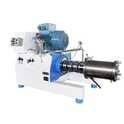
Before discussing integration, it's essential to understand what a disc type bead mill is and how it functions. A disc type bead mill is a high - energy milling device used for wet grinding and dispersing of various materials. It consists of a grinding chamber filled with grinding media (usually beads), and a series of discs attached to a rotating shaft. As the shaft rotates, the discs agitate the grinding media, causing intense collisions and shearing forces that break down the particles of the material being processed.
This type of bead mill is known for its high efficiency, excellent dispersion quality, and the ability to achieve very fine particle sizes. It is widely used in industries such as paints, coatings, inks, pharmaceuticals, and nano - fertilizers. For example, in the production of Bead Mill For Nano Fertilizer, a disc type bead mill can effectively grind and disperse the raw materials to produce nano - sized particles, which improves the nutrient absorption efficiency of the fertilizer.
Benefits of Integrating a Disc Type Bead Mill into a Production Line
1. Improved Productivity
Integrating a disc type bead mill into a production line can significantly enhance productivity. By automating the grinding and dispersing process, it reduces the need for manual handling and multiple batch processing. The continuous operation of the bead mill allows for a seamless flow of materials through the production line, minimizing downtime between batches and increasing the overall output.
2. Consistent Product Quality
The precise control and uniform grinding action of a disc type bead mill ensure consistent product quality. In a production line, the same set of operating parameters can be maintained throughout the production process, resulting in products with consistent particle size distribution, viscosity, and other quality characteristics. This is particularly important in industries such as Sand Mill For Ink, where the quality of the ink directly affects the printing performance.
3. Cost - Efficiency
In the long run, integrating a disc type bead mill into a production line can lead to cost savings. The reduction in labor costs due to automation, along with the improved energy efficiency of the bead mill, can lower the overall production cost. Additionally, the consistent product quality reduces the likelihood of product rejections, further saving on production costs.
4. Space Saving
A well - integrated disc type bead mill can be designed to fit into the existing production layout, saving valuable floor space. This is especially beneficial for manufacturers with limited production space.
Challenges of Integration
1. Compatibility Issues
One of the main challenges of integrating a disc type bead mill into a production line is ensuring compatibility with other equipment in the line. The bead mill needs to be able to handle the flow rate, viscosity, and particle size of the incoming materials, as well as interface properly with upstream and downstream equipment such as pumps, mixers, and filters.
2. Process Optimization
Integrating a new piece of equipment like a disc type bead mill requires careful process optimization. The operating parameters of the bead mill, such as the rotation speed of the discs, the size and type of grinding media, and the flow rate of the material, need to be adjusted to achieve the best results in the context of the entire production line. This may involve time - consuming trials and adjustments.
3. Maintenance and Cleaning
Regular maintenance and cleaning are essential for the proper functioning of a disc type bead mill. In a production line, it can be challenging to schedule maintenance and cleaning without disrupting the overall production process. Moreover, the cleaning process needs to be effective in removing all traces of the previous material to prevent cross - contamination.
Key Considerations for Integration
1. Production Line Design
When integrating a disc type bead mill, it is crucial to consider the overall design of the production line. The layout should allow for easy access to the bead mill for maintenance and cleaning, as well as efficient material flow. The location of the bead mill should be carefully chosen to minimize the distance between it and other related equipment, reducing the pressure drop and energy consumption in the system.
2. Material Handling
Proper material handling is essential for the successful integration of a disc type bead mill. The incoming material should be fed into the bead mill at a consistent rate and with the appropriate viscosity. This may require the use of pumps, feeders, and other material handling equipment. The design of the material handling system should also take into account the potential for clogging and the need for easy cleaning.
3. Control System
A reliable control system is necessary to monitor and control the operation of the disc type bead mill in the production line. The control system should be able to adjust the operating parameters of the bead mill in real - time based on the feedback from sensors, ensuring optimal performance and product quality. It should also be integrated with the control systems of other equipment in the production line for seamless operation.
4. Safety
Safety is a top priority in any production environment. When integrating a disc type bead mill, appropriate safety measures should be implemented, such as guards around moving parts, emergency stop buttons, and proper ventilation to remove any potentially hazardous fumes or dust.
Case Studies
Let's take a look at a few real - world examples of successful integration of disc type bead mills into production lines.
In a paint manufacturing plant, a disc type bead mill was integrated into the production line to replace an old - fashioned batch - type grinding system. The new bead mill was connected to a continuous mixer upstream and a filling machine downstream. By adjusting the flow rate and operating parameters, the plant was able to increase its production capacity by 30% while improving the quality of the paint. The consistent particle size distribution of the paint led to better coverage and finish, resulting in higher customer satisfaction.
In a pharmaceutical company, a disc type bead mill was integrated into the production line for the production of a new drug formulation. The bead mill was used to grind and disperse the active pharmaceutical ingredients to the required particle size. By integrating the bead mill with the other equipment in the line, such as the homogenizer and the tablet press, the company was able to streamline the production process and reduce the production time by 20%. The improved product quality also met the strict regulatory requirements.
Conclusion
In conclusion, a disc type bead mill can indeed be integrated into a production line, offering numerous benefits such as improved productivity, consistent product quality, cost - efficiency, and space saving. However, it also presents some challenges, including compatibility issues, process optimization, and maintenance. By carefully considering the key factors such as production line design, material handling, control system, and safety, these challenges can be overcome.
If you are considering integrating a disc type bead mill into your production line, we are here to help. Our team of experts can provide you with customized solutions based on your specific production requirements. Whether you need a Bead Mill For Nano Fertilizer, a Sand Mill For Ink, or a Laboratory Bead Mill, we have the right equipment and expertise to ensure a successful integration. Contact us today to start the discussion about your procurement needs and let's work together to enhance your production line.
References
- "Principles of Particle Technology" by Alan Rhodes
- "Industrial Mixing: Science and Practice" by Edward L. Paul, Victor A. Atiemo - Obeng, and Suzanne M. Kresta
- Technical literature from leading bead mill manufacturers