


Hey there! As a supplier of Pin Type Bead Mills, I often get asked about the difference between wet and dry grinding in these machines. So, I thought I'd write this blog to break it down for you in a simple way.
Let's start with the basics. A Pin Type Bead Mill is a powerful tool used in various industries for size reduction, dispersion, and homogenization of materials. It works by using pins or pegs inside a chamber filled with beads to grind and disperse the material. Now, when it comes to grinding, there are two main methods: wet grinding and dry grinding.
Wet Grinding
Wet grinding is a process where the material to be ground is mixed with a liquid, usually water or a solvent. This mixture is then fed into the Pin Type Bead Mill. One of the biggest advantages of wet grinding is that it can achieve a much finer particle size compared to dry grinding. The liquid acts as a lubricant, reducing friction between the beads and the material, which allows for more efficient grinding.
Another benefit of wet grinding is that it can prevent the formation of dust. In industries where dust can be a health hazard or a fire risk, wet grinding is often the preferred method. For example, in the pharmaceutical industry, wet grinding is used to produce fine powders for tablets and capsules, ensuring that the product is safe and of high quality.
Wet grinding also allows for better control over the grinding process. The viscosity of the liquid can be adjusted to optimize the grinding efficiency. Additionally, the liquid can act as a heat transfer medium, dissipating the heat generated during the grinding process. This helps to prevent overheating of the material, which can cause degradation or change in properties.
However, wet grinding also has its drawbacks. One of the main challenges is the need to separate the liquid from the ground material after the grinding process. This can be a time-consuming and expensive process, especially if the liquid needs to be recycled. Another issue is that some materials may react with the liquid, which can affect the quality of the final product.
If you're interested in learning more about bead mill homogenization, you can check out our Bead Mill Homogenizer page.
Dry Grinding
Dry grinding, on the other hand, is a process where the material is ground without the addition of a liquid. This method is often used when the material is dry and free-flowing, or when the final product needs to be in a dry form.
One of the advantages of dry grinding is that it is a simpler and more cost-effective process compared to wet grinding. There is no need for a liquid, so there is no need for separation or recycling. This makes dry grinding a popular choice for industries where cost is a major factor, such as the mining and construction industries.
Dry grinding also allows for a higher throughput. Since there is no liquid to slow down the grinding process, the material can be fed into the mill at a faster rate. This can increase the productivity of the mill and reduce the overall processing time.
However, dry grinding also has its limitations. One of the main issues is the generation of dust. As the material is ground, fine particles are released into the air, which can be a health hazard for workers and can also cause environmental pollution. To mitigate this problem, dust collection systems are often used, but these can add to the cost of the process.
Another limitation of dry grinding is that it can be more difficult to achieve a fine particle size compared to wet grinding. The lack of a liquid lubricant can cause the material to agglomerate, which can reduce the grinding efficiency. Additionally, the heat generated during the grinding process can cause the material to stick to the beads and the walls of the mill, which can also affect the quality of the final product.
If you're looking for a nano grinding solution, you can visit our Nano Grinding Mill page.
Which One to Choose?
So, which method is better - wet grinding or dry grinding? Well, it really depends on the specific requirements of your application. Here are some factors to consider when making your decision:

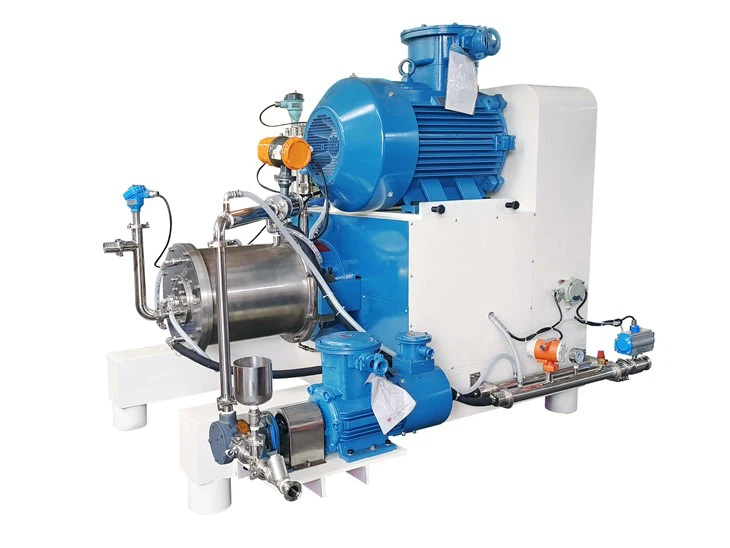
- Particle Size: If you need to achieve a very fine particle size, wet grinding is usually the better option. However, if a coarser particle size is acceptable, dry grinding may be sufficient.
- Material Properties: Some materials may be more suitable for wet grinding, while others may be better suited for dry grinding. For example, materials that are sensitive to moisture or that react with liquids may be better processed using dry grinding.
- Cost: Dry grinding is generally a more cost-effective method, especially for large-scale production. However, if the cost of separating and recycling the liquid in wet grinding is not a major concern, wet grinding may be a better choice.
- Environmental and Safety Considerations: If dust is a concern, wet grinding is the preferred method. However, if the liquid used in wet grinding can be a source of pollution or a safety hazard, dry grinding may be more appropriate.
Comparison with Other Types of Bead Mills
It's also worth mentioning how wet and dry grinding in a Pin Type Bead Mill compare to other types of bead mills, such as the Disc Type Bead Mill.
The Disc Type Bead Mill uses discs instead of pins to agitate the beads and grind the material. In wet grinding, both the Pin Type and Disc Type Bead Mills can achieve similar results in terms of particle size reduction. However, the Pin Type Bead Mill may offer better dispersion and homogenization due to the more intense agitation provided by the pins.
In dry grinding, the Pin Type Bead Mill may have an advantage over the Disc Type Bead Mill in terms of preventing material agglomeration. The pins can break up the agglomerates more effectively, resulting in a more uniform particle size distribution.
If you want to learn more about the Disc Type Bead Mill, you can visit our Disc Type Bead Mill page.
Conclusion
In conclusion, both wet and dry grinding have their own advantages and disadvantages in a Pin Type Bead Mill. The choice between the two methods depends on a variety of factors, including the desired particle size, material properties, cost, and environmental and safety considerations.
As a supplier of Pin Type Bead Mills, we have the expertise and experience to help you choose the right grinding method for your specific application. Whether you need a wet grinding solution for a fine particle size or a dry grinding process for cost-effective production, we can provide you with the right equipment and support.
If you're interested in learning more about our Pin Type Bead Mills or have any questions about wet or dry grinding, please don't hesitate to contact us. We'd be happy to discuss your requirements and help you find the best solution for your business.
References
- Smith, J. (2018). Grinding Technology: Theory and Applications of Mineral Processing. Wiley.
- Jones, A. (2019). Particle Size Reduction in the Pharmaceutical Industry. Pharmaceutical Technology.
- Brown, C. (2020). Comparison of Wet and Dry Grinding Processes in the Mining Industry. Mining Engineering Journal.


