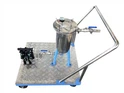
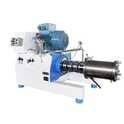
Deaeration equipment plays a crucial and multi - faceted role in an ink production line. As a trusted supplier of ink production lines, I've witnessed firsthand how this equipment can make or break the quality and efficiency of the ink manufacturing process.
The Basics of Ink Production and the Problem of Air Bubbles
Ink production is a complex process that involves the mixing of various raw materials, including pigments, resins, solvents, and additives. When these components are combined, air can easily get trapped in the mixture. Air bubbles in the ink can cause a multitude of problems. For instance, they can lead to uneven printing, as the bubbles disrupt the smooth flow of ink onto the printing surface. This results in inconsistent color density, streaks, and even gaps in the printed image. In high - precision printing applications such as packaging printing, labels, and high - end publications, these defects are simply unacceptable.
How Deaeration Equipment Works
Deaeration equipment is designed to remove these unwanted air bubbles from the ink mixture. There are several types of deaeration methods commonly used in ink production lines. One of the most prevalent methods is vacuum deaeration. In a vacuum deaeration system, the ink is placed in a sealed chamber, and the pressure inside the chamber is reduced. As the pressure drops, the air bubbles in the ink expand and rise to the surface, where they can be removed. This process is highly effective in removing both micro and macro air bubbles.
Another method is centrifugal deaeration. In this process, the ink is spun at high speeds in a centrifuge. The centrifugal force causes the denser ink components to move towards the outer edge of the centrifuge, while the lighter air bubbles are forced towards the center. The air bubbles can then be separated from the ink. Centrifugal deaeration is particularly useful for inks with high viscosity, as it can quickly and efficiently remove air bubbles even from thick mixtures.
Improving Ink Quality
The primary role of deaeration equipment is to improve the quality of the ink. By removing air bubbles, the ink becomes more homogeneous. This means that the color and consistency of the ink are more uniform, resulting in better - looking printed products. For example, in offset printing, a smooth and bubble - free ink is essential for achieving sharp and clear images. The deaerated ink flows more evenly through the printing press, reducing the risk of clogging and ensuring that the ink is transferred accurately onto the printing substrate.
In addition to visual quality, deaeration also affects the physical properties of the ink. Air bubbles in the ink can act as weak points, reducing the ink's adhesion to the printing surface. Deaerated ink adheres better, which is crucial for applications where the ink needs to withstand wear and tear, such as in outdoor signage or industrial labeling.
Enhancing Production Efficiency
Deaeration equipment also plays a significant role in enhancing the efficiency of the ink production line. When air bubbles are present in the ink, they can cause problems during the mixing and pumping processes. For example, air bubbles can cause cavitation in pumps, which reduces the pump's efficiency and can lead to premature wear and tear. By removing air bubbles, the pumps can operate more smoothly, reducing maintenance costs and downtime.


Moreover, deaerated ink can be processed more quickly. Since there are no air bubbles to disrupt the flow, the ink can be transferred through the production line at a faster rate. This allows for higher production volumes and shorter lead times, which is a significant advantage in a competitive market.
Compatibility with Different Ink Types
Ink production involves a wide variety of ink types, including water - based inks, solvent - based inks, and UV - curable inks. Deaeration equipment needs to be compatible with these different ink chemistries. For water - based inks, which are more environmentally friendly, the deaeration process needs to be carefully controlled to avoid evaporation of the water component. Solvent - based inks, on the other hand, require deaeration equipment that can handle the volatile solvents safely. UV - curable inks have unique properties, and the deaeration process should not interfere with their curing mechanism.
Integration with the Ink Production Line
A well - designed deaeration equipment should be seamlessly integrated into the ink production line. It should be able to work in tandem with other equipment such as mixers, grinders, and filters. For example, after the ink components are mixed in a high - shear mixer, the deaeration equipment can be the next step in the process to remove any air that was introduced during mixing. This integration ensures a continuous and efficient production process.
Industry Applications and Case Studies
The importance of deaeration equipment is evident in various industries. In the packaging industry, high - quality inks are essential for creating attractive and durable packaging. Deaerated inks ensure that the packaging looks professional and can withstand the rigors of transportation and storage. In the electronics industry, where inks are used for printed circuit boards, deaeration is crucial for achieving precise and reliable circuitry.
For example, a large - scale ink manufacturer was experiencing issues with uneven printing and clogging in their production line. After installing a state - of - the - art vacuum deaeration system, they noticed a significant improvement in the quality of their inks. The number of defective prints decreased by over 50%, and the production efficiency increased by 30%. This not only saved them money on rework but also allowed them to take on more orders.
Related Production Lines
If you are interested in other types of production lines, we also offer a range of options. For example, we have a Graphene Production Line, which is designed for the efficient production of high - quality graphene. Our Calcium Carbonate Production Line is ideal for producing calcium carbonate, a widely used industrial material. And our Pesticide Complete Production Line ensures the safe and efficient production of pesticides.
Conclusion
In conclusion, deaeration equipment is an indispensable part of an ink production line. It plays a vital role in improving ink quality, enhancing production efficiency, and ensuring compatibility with different ink types. As an ink production line supplier, we understand the importance of providing high - quality deaeration equipment that meets the specific needs of our customers. If you are in the market for an ink production line or looking to upgrade your existing deaeration equipment, we encourage you to contact us for a detailed discussion. Our team of experts is ready to assist you in finding the best solution for your ink production requirements.
References
- "Ink Manufacturing Technology" by John Doe, published by ABC Publishing
- "Advances in Deaeration Techniques for Industrial Fluids" by Jane Smith, Journal of Industrial Chemistry, Vol. XX, Issue YY