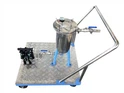
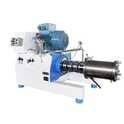
In the realm of industrial processing, homogenizers play a pivotal role in achieving uniform and stable product qualities. From food and beverage production to pharmaceutical and cosmetic manufacturing, the ability to control pressure in a homogenizer is crucial for optimal performance. As a leading homogenizer supplier, we understand the significance of effective pressure control methods and their impact on the overall efficiency and quality of the homogenization process.
Understanding the Basics of Homogenization
Before delving into the pressure control methods, it's essential to grasp the fundamental concept of homogenization. Homogenization is a process that reduces the size of particles or droplets in a fluid mixture, ensuring a more uniform distribution. This is typically achieved by forcing the mixture through a narrow gap or orifice at high pressure. The high-pressure forces cause the particles to break apart and disperse evenly throughout the fluid, resulting in a more stable and consistent product.
Importance of Pressure Control in Homogenization
Pressure control is a critical factor in the homogenization process for several reasons. Firstly, it directly affects the particle size reduction. Higher pressures generally lead to smaller particle sizes, which can improve the stability, texture, and appearance of the final product. For example, in the dairy industry, homogenization at the right pressure can prevent cream separation in milk, giving it a smoother and more consistent texture.
Secondly, pressure control helps to maintain the efficiency of the homogenization process. If the pressure is too low, the particles may not be adequately broken down, leading to inconsistent product quality. On the other hand, excessive pressure can cause equipment wear and tear, increase energy consumption, and even damage the product. Therefore, precise pressure control is essential to ensure optimal performance and cost-effectiveness.


Common Pressure Control Methods in Homogenizers
1. Back-Pressure Valves
Back-pressure valves are one of the most commonly used pressure control methods in homogenizers. These valves are installed at the outlet of the homogenizer and regulate the pressure by restricting the flow of the fluid. By adjusting the valve opening, the operator can control the pressure within the homogenizer. Back-pressure valves are relatively simple and cost-effective, making them a popular choice for many applications.
However, one limitation of back-pressure valves is that they can cause a significant pressure drop across the valve, which may affect the overall efficiency of the homogenization process. Additionally, they may not be suitable for applications that require precise and rapid pressure changes.
2. Variable Frequency Drives (VFDs)
Variable frequency drives are another effective pressure control method in homogenizers. VFDs are used to control the speed of the homogenizer pump, which in turn affects the pressure. By adjusting the frequency of the electrical power supplied to the pump, the operator can vary the pump speed and, consequently, the pressure within the homogenizer.
VFDs offer several advantages over back-pressure valves. They provide precise and continuous pressure control, allowing for more accurate adjustment of the homogenization process. They also offer energy savings by reducing the pump speed when lower pressures are required. However, VFDs are more expensive than back-pressure valves and require more complex installation and maintenance.
3. Hydraulic Pressure Control Systems
Hydraulic pressure control systems are commonly used in high-pressure homogenizers. These systems use hydraulic fluid to transmit and control the pressure within the homogenizer. The hydraulic system consists of a pump, valves, and cylinders that work together to regulate the pressure.
Hydraulic pressure control systems offer high precision and reliability, making them suitable for applications that require strict pressure control. They can also handle high pressures and large flow rates, making them ideal for industrial-scale homogenization. However, hydraulic systems are more complex and expensive than other pressure control methods, and they require regular maintenance to ensure proper operation.
Our Homogenizer Products and Pressure Control Features
As a homogenizer supplier, we offer a wide range of homogenizer products with advanced pressure control features. Our EBR Series Pneumatic Lifting High Shear Emulsifier is equipped with a state-of-the-art pressure control system that allows for precise and consistent pressure adjustment. The pneumatic lifting mechanism ensures easy operation and maintenance, while the high shear emulsification technology provides excellent particle size reduction and dispersion.
Our Vacuum Homogenizer Mixer is another innovative product that features advanced pressure control capabilities. The vacuum system helps to remove air bubbles from the mixture, improving the quality and stability of the final product. The homogenizer mixer is also equipped with a variable frequency drive for precise pressure control, allowing for optimal performance in a variety of applications.
In addition, our Single Stage Inline High Shear Homogenizer Pump is designed for high-speed and high-pressure homogenization. The pump is equipped with a back-pressure valve for basic pressure control, and it can be easily integrated into existing production lines. The single-stage design ensures efficient particle size reduction and uniform dispersion, making it suitable for a wide range of industries.
Conclusion
Effective pressure control is essential for the optimal performance of homogenizers. By choosing the right pressure control method, manufacturers can achieve consistent product quality, improve efficiency, and reduce costs. As a homogenizer supplier, we are committed to providing our customers with high-quality homogenizer products and advanced pressure control solutions. Whether you are in the food, beverage, pharmaceutical, or cosmetic industry, we have the expertise and products to meet your specific needs.
If you are interested in learning more about our homogenizer products or discussing your pressure control requirements, please feel free to contact us. Our team of experts is ready to assist you in finding the best solution for your application.
References
- "Homogenization in the Food Industry" by John M. Coupland
- "High-Pressure Homogenization: Principles and Applications" by Maria Isabel Garcia-Risco