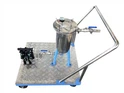
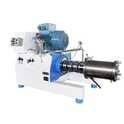
Hey there! As a supplier of Disc Type Bead Mills, I often get asked about the maximum pressure these machines can withstand. It's a crucial question, especially for industries that rely on these mills for various processes. So, let's dive right in and explore this topic.
First off, what exactly is a Disc Type Bead Mill? Well, it's a piece of equipment used for grinding, dispersing, and homogenizing materials. It works by using beads made of different materials like glass, ceramic, or zirconium oxide. These beads are agitated by rotating discs inside the mill chamber, which causes the materials to be broken down into smaller particles.
Now, the maximum pressure a Disc Type Bead Mill can withstand depends on several factors. One of the most important factors is the design and construction of the mill. High - quality mills are built with strong materials and advanced engineering to handle higher pressures. For example, the housing of the mill needs to be made of a durable material that can resist deformation under pressure. Stainless steel is a common choice because it's strong, corrosion - resistant, and can handle high - stress situations.
Another factor is the type of seals used in the mill. Seals are essential to prevent leakage of the materials being processed and to maintain the pressure inside the chamber. High - performance seals can withstand higher pressures without failing. They are designed to create a tight barrier between the moving parts and the outside environment.
The size and shape of the mill also play a role. Larger mills may be able to handle more pressure because they have a larger surface area to distribute the force. However, this also depends on the internal structure and how well it's reinforced.


Let's talk about the applications of Disc Type Bead Mills. There are different types of bead mills for various industries. For instance, the Bead Mill for Cell Disruption is used in the biotechnology and pharmaceutical industries. In these applications, the mill needs to be able to handle a certain level of pressure to effectively break open cells and extract their contents. The pressure requirements here are usually not extremely high but need to be precise to ensure the integrity of the biological materials.
On the other hand, the Ink Bead Mill is used in the printing and ink industries. These mills often need to handle higher pressures because they are dealing with viscous inks. The pressure helps to break down the pigment particles in the ink and ensure a smooth and consistent dispersion.
The High Viscosity Conic Bead Mill is specifically designed for materials with high viscosity. As the name suggests, it has a conical shape which allows for better flow and pressure distribution. This type of mill can handle relatively high pressures to process thick and sticky materials.
In general, the maximum pressure a Disc Type Bead Mill can withstand can range from a few bars to several hundred bars. For small - scale laboratory mills, the pressure might be in the range of 1 - 10 bars. These mills are used for research and development purposes where the volume of material being processed is small.
For industrial - scale mills, the pressure can go much higher. Some high - end industrial Disc Type Bead Mills can withstand pressures up to 200 - 300 bars. These mills are used in large - scale manufacturing processes where high - efficiency and high - throughput are required.
But it's important to note that operating a mill at its maximum pressure all the time is not recommended. Continuous operation at the maximum pressure can cause excessive wear and tear on the components, leading to a shorter lifespan of the mill. It can also increase the risk of mechanical failures and safety hazards.
To ensure the safe and efficient operation of a Disc Type Bead Mill, regular maintenance is crucial. This includes checking the seals, lubricating the moving parts, and inspecting the internal components for any signs of damage. It's also important to follow the manufacturer's guidelines regarding pressure limits and operating conditions.
If you're in the market for a Disc Type Bead Mill, it's essential to consider your specific requirements. Think about the type of materials you'll be processing, the volume of production, and the pressure requirements. Our company offers a wide range of Disc Type Bead Mills that are designed to meet different needs. Whether you need a mill for cell disruption, ink production, or high - viscosity materials, we've got you covered.
If you have any questions or want to discuss your specific requirements, don't hesitate to reach out. We're here to help you find the perfect Disc Type Bead Mill for your business. Our team of experts can provide you with detailed information and guidance to make an informed decision.
In conclusion, the maximum pressure a Disc Type Bead Mill can withstand is influenced by multiple factors such as design, seals, size, and application. By understanding these factors and choosing the right mill for your needs, you can ensure efficient and safe operation in your production processes. So, if you're looking to upgrade or purchase a new Disc Type Bead Mill, give us a shout, and let's start a conversation about how we can help you achieve your goals.
References
- "Principles of Bead Milling" - A technical guide on bead mill operation and design.
- Industry reports on the use of Disc Type Bead Mills in different sectors.