Hey there! As a supplier of Basket Mills, I often get asked about the differences between vertical and horizontal Basket Mills. So, I thought I'd write this blog to break it all down for you.
Let's start with the basics. A Basket Mill is a piece of equipment used for grinding and dispersing materials. It's got a basket that holds the grinding media, and as the basket rotates, it breaks down the particles in the material you're processing. Now, onto the main event: the difference between vertical and horizontal Basket Mills.
Vertical Basket Mills
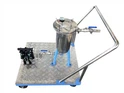
Vertical Basket Mills are pretty straightforward. The basket in these mills is positioned vertically. One of the big advantages of a vertical Basket Mill is its simplicity. It's relatively easy to install and operate. You don't need a whole lot of space either, which is great if you're working in a smaller facility.
The vertical design also makes it easier to clean. Since the basket is upright, you can easily access it for maintenance and cleaning. This is super important because keeping your equipment clean helps it last longer and ensures the quality of your products.
Another benefit is that vertical Basket Mills are often more energy - efficient. They use less power to operate compared to some other types of mills. This can save you a lot of money on your electricity bills in the long run.
But, vertical Basket Mills do have their limitations. They might not be the best choice for very high - viscosity materials. The vertical design can make it a bit difficult for the material to flow properly through the basket, especially if it's thick. Also, they might not be as effective for large - scale production as horizontal Basket Mills.
If you're interested in a vertical Basket Mill for your nano material processing needs, you can check out our Basket Mill For Nano Material.
Horizontal Basket Mills
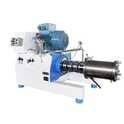
Horizontal Basket Mills, on the other hand, have the basket positioned horizontally. One of the key advantages of a horizontal Basket Mill is its ability to handle high - viscosity materials much better than vertical ones. The horizontal design allows the material to flow more smoothly through the basket, even if it's thick.


These mills are also great for large - scale production. They can process a larger volume of material at once, which is ideal if you have a high - demand manufacturing operation. The horizontal orientation gives the material more time to interact with the grinding media, resulting in a more thorough grinding and dispersion.
However, horizontal Basket Mills do come with some drawbacks. They are usually more complex and require more space to install. Maintenance can also be a bit more challenging because the basket is horizontal, and it might be harder to access certain parts for cleaning and repairs.
If you're looking for a laboratory - scale horizontal Basket Mill, we have some great options. Check out our Laboratory Basket Mill and Laboratory Basket Mill for more information.
Key Differences in Performance
When it comes to performance, the two types of Basket Mills have some distinct differences. In terms of particle size reduction, horizontal Basket Mills often achieve a more uniform particle size distribution. The longer contact time between the material and the grinding media in the horizontal design helps break down the particles more evenly.
Vertical Basket Mills, while they can also reduce particle size, might not be as precise in achieving a uniform distribution, especially for difficult - to - process materials.
In terms of throughput, horizontal Basket Mills win hands down for large - scale operations. They can process more material in a shorter amount of time. Vertical Basket Mills are better suited for smaller - scale or batch - type production.
Cost Considerations
Cost is always an important factor when choosing a Basket Mill. Vertical Basket Mills are generally less expensive to purchase. They also have lower installation costs because they require less space and are easier to set up.
Horizontal Basket Mills, due to their complexity and larger size, are usually more expensive. But, if you're looking at the long - term cost - effectiveness for large - scale production, the higher throughput and better performance of horizontal Basket Mills might make them a more cost - effective choice in the end.
Application - Specific Considerations
The choice between a vertical and a horizontal Basket Mill also depends on the specific application. If you're working with low - viscosity materials like paints, inks, or some food products, a vertical Basket Mill might be sufficient. It can provide a good balance between cost, performance, and ease of use.
For high - viscosity materials such as adhesives, sealants, or some pharmaceutical products, a horizontal Basket Mill is likely the better option. It can handle the thick materials and ensure proper grinding and dispersion.
Conclusion
So, there you have it! The main differences between vertical and horizontal Basket Mills. Each type has its own pros and cons, and the right choice for you depends on your specific needs, such as the type of material you're processing, the scale of your production, and your budget.
If you're still not sure which Basket Mill is right for you, don't hesitate to reach out to us. We're here to help you make the best decision for your business. Whether you're in the market for a small - scale laboratory mill or a large - scale industrial one, we've got you covered. Let's have a chat and see how we can meet your grinding and dispersing needs.
References
- Industry reports on grinding and dispersing equipment
- Technical specifications of vertical and horizontal Basket Mills