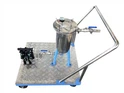
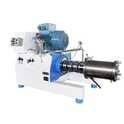
Evaluating the performance of a mixing reactor is crucial for any industry that relies on efficient mixing processes. As a Mixing Reactor supplier, we understand the importance of providing our customers with reactors that meet and exceed their expectations. In this blog post, we will discuss the key factors to consider when evaluating the performance of a mixing reactor and how our products can help you achieve optimal results.
1. Mixing Efficiency
Mixing efficiency is one of the most important aspects of a mixing reactor's performance. It refers to the ability of the reactor to achieve a uniform mixture of reactants in a given time. A highly efficient mixing reactor can reduce reaction times, improve product quality, and increase production yields.
To evaluate mixing efficiency, several methods can be used. One common approach is to measure the coefficient of variation (CV) of a tracer material in the mixture. A lower CV indicates a more uniform mixture. Another method is to use computational fluid dynamics (CFD) simulations. CFD can provide detailed information about the flow patterns and mixing behavior inside the reactor, allowing for optimization of the reactor design and operating conditions.
Our Mixing Reactors are designed with advanced mixing mechanisms to ensure high mixing efficiency. We use state-of-the-art impellers and baffles that are carefully engineered to create turbulent flow and promote thorough mixing. Additionally, our reactors can be customized with different mixing configurations to meet the specific requirements of your process.
2. Heat Transfer
Heat transfer is another critical factor in the performance of a mixing reactor. Many chemical reactions are either exothermic (release heat) or endothermic (absorb heat), and proper heat transfer is essential to maintain the reaction temperature within the desired range.
The rate of heat transfer in a mixing reactor depends on several factors, including the thermal conductivity of the reactants, the surface area of the heat transfer equipment, and the flow rate of the coolant. To evaluate heat transfer performance, you can measure the temperature difference between the inlet and outlet of the coolant and calculate the heat transfer coefficient.
Our Mixing Reactors are equipped with efficient heat transfer systems to ensure precise temperature control. We offer a variety of heat transfer options, such as jacketed vessels and internal coils, to meet the specific heat transfer requirements of your process. Our engineers can also help you optimize the heat transfer design based on your reaction kinetics and operating conditions.
3. Mass Transfer
Mass transfer plays a vital role in many chemical reactions, especially those involving multiple phases (e.g., liquid-liquid or gas-liquid reactions). It refers to the transfer of species from one phase to another and is essential for achieving high reaction rates and product yields.
To evaluate mass transfer performance, you can measure the rate of mass transfer between the phases and calculate the mass transfer coefficient. Factors that affect mass transfer include the interfacial area between the phases, the diffusion coefficient of the species, and the agitation intensity.
Our Mixing Reactors are designed to enhance mass transfer by creating a large interfacial area between the phases and promoting turbulent flow. We use specialized impellers and mixing techniques to ensure efficient dispersion and mixing of the phases, resulting in improved mass transfer rates.
4. Power Consumption
Power consumption is an important consideration when evaluating the performance of a mixing reactor. A high-power consumption can lead to increased operating costs and reduced energy efficiency.
To evaluate power consumption, you can measure the power input to the mixer and calculate the power per unit volume of the reactor. Factors that affect power consumption include the size and type of the impeller, the viscosity of the reactants, and the agitation speed.
Our Mixing Reactors are designed to be energy-efficient, with optimized impeller designs and motor selections. We use advanced computational tools to minimize power consumption while maintaining high mixing performance. By choosing our reactors, you can reduce your operating costs and improve your overall energy efficiency.
5. Durability and Maintenance
The durability and maintenance requirements of a mixing reactor are also important factors to consider. A reliable and easy-to-maintain reactor can reduce downtime and maintenance costs, ensuring continuous operation and high productivity.
When evaluating durability, you should consider the materials of construction, the quality of the manufacturing, and the design features. Our Mixing Reactors are constructed from high-quality materials, such as stainless steel and corrosion-resistant alloys, to ensure long-term durability and resistance to chemical attack. We also use advanced manufacturing processes to ensure precise tolerances and high-quality construction.
In terms of maintenance, our reactors are designed for easy access and cleaning. We provide detailed maintenance manuals and offer technical support to help you keep your reactor in optimal condition.
6. Scalability
Scalability is an important consideration for industries that may need to increase production capacity in the future. A scalable mixing reactor can be easily adapted to different batch sizes and production volumes without sacrificing performance.
When evaluating scalability, you should consider the design of the reactor, the mixing mechanism, and the control system. Our Mixing Reactors are designed to be scalable, with modular designs that can be easily modified to accommodate different production requirements. We also offer customized control systems that can be optimized for different batch sizes and operating conditions.
7. Safety
Safety is of utmost importance in any chemical processing facility. A safe mixing reactor can prevent accidents and protect your workers and the environment.
When evaluating safety, you should consider the design features of the reactor, such as pressure relief valves, temperature sensors, and emergency shutdown systems. Our Mixing Reactors are equipped with a comprehensive range of safety features to ensure safe operation. We also provide detailed safety manuals and training to help you operate our reactors safely.


In conclusion, evaluating the performance of a mixing reactor requires a comprehensive assessment of several key factors, including mixing efficiency, heat transfer, mass transfer, power consumption, durability, maintenance, scalability, and safety. As a Mixing Reactor supplier, we are committed to providing our customers with high-quality reactors that meet these performance criteria. Our Mixing Reactor products are designed with advanced technology and innovative features to ensure optimal performance and reliability.
In addition, we also offer Movable Tank and Vessel options, which provide flexibility and convenience for your industrial processes.
If you are interested in learning more about our Mixing Reactors or would like to discuss your specific requirements, please feel free to contact us. Our team of experts is ready to assist you in finding the best solution for your mixing needs.
References
- Levenspiel, O. (1999). Chemical Reaction Engineering (3rd Edition). Wiley.
- Doraiswamy, L. K., & Sharma, M. M. (1984). Heterogeneous Reactions: Analysis, Examples, and Reactor Design. Wiley.
- Walas, S. M. (1990). Chemical Process Equipment: Selection and Design. Butterworth-Heinemann.