Can a paint bead mill be used for plastic paint production?
As a supplier of paint bead mills, I am often asked whether our equipment can be used for plastic paint production. This is a question that delves into the intersection of technology, materials, and manufacturing processes. In this blog post, I will explore the viability of using a paint bead mill in the production of plastic paints, examining the technical aspects, benefits, and potential challenges.
Understanding Paint Bead Mills
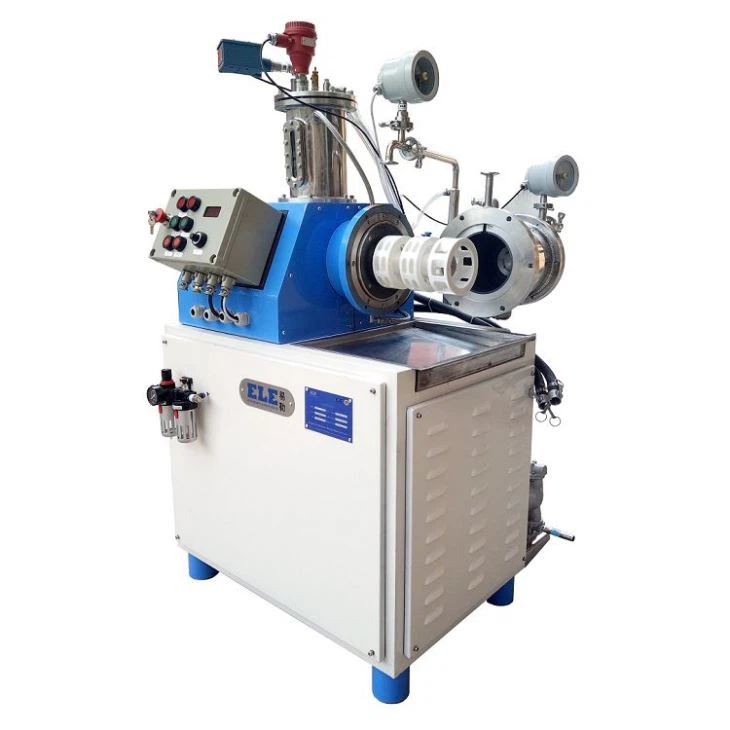
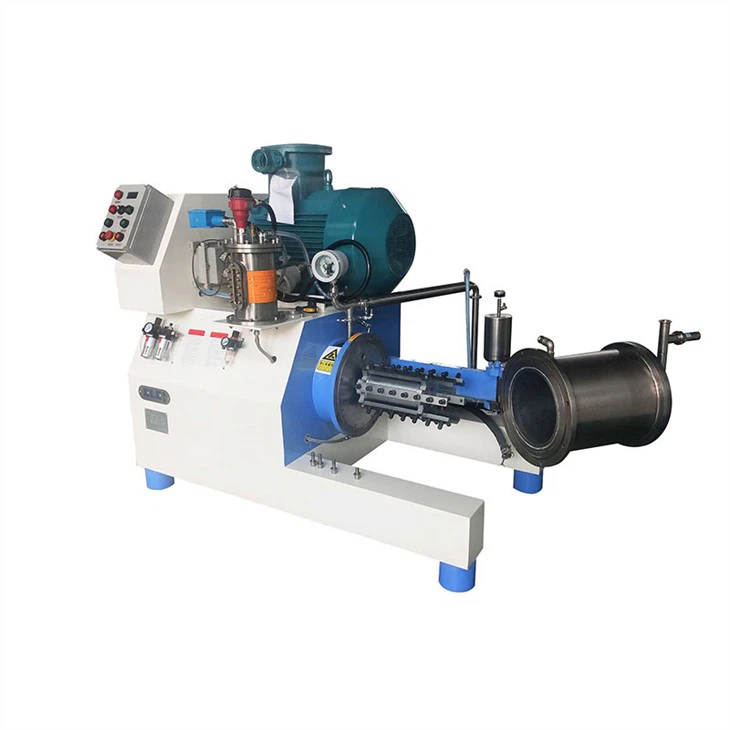
Before we discuss the application in plastic paint production, let's first understand what a paint bead mill is. A paint bead mill is a type of grinding equipment that uses beads (usually made of materials like zirconia, glass, or ceramic) to break down particles in a liquid suspension. The beads are agitated within a chamber, causing them to collide with the particles in the paint, reducing their size through shear and impact forces. This process is crucial for achieving a fine and uniform particle size distribution in the paint, which is essential for its quality and performance.
There are different types of paint bead mills available, each with its own unique features and capabilities. For example, the Nano Material Bead Mill is designed specifically for processing materials at the nanoscale, offering high precision and efficiency. The Titanium Dioxide Bead Mill is optimized for grinding titanium dioxide, a common pigment in paints, to achieve a high degree of dispersion. And the Sand Mill For Kaolin is suitable for processing kaolin, a clay mineral often used as a filler in paints.
Plastic Paints: Characteristics and Requirements
Plastic paints are a type of paint that contains plastic resins as the binder. These resins provide the paint with its adhesion, durability, and flexibility. Plastic paints are widely used in various applications, such as automotive coatings, furniture finishes, and plastic product coatings.
The production of plastic paints requires a high level of precision and control. The particles in the paint need to be finely ground and uniformly dispersed to ensure a smooth and consistent finish. In addition, the paint needs to have good adhesion to the plastic substrate, which can be affected by the particle size and distribution. Therefore, the grinding equipment used in plastic paint production needs to be able to meet these requirements.
Can a Paint Bead Mill be Used for Plastic Paint Production?
The answer is yes. A paint bead mill can be effectively used for plastic paint production. Here are some of the reasons why:
- Particle Size Reduction: As mentioned earlier, a paint bead mill is capable of reducing the particle size of the pigments and fillers in the paint. This is important for plastic paints, as smaller particles can provide better coverage and a smoother finish. By using a paint bead mill, the particles in the plastic paint can be ground to a very fine size, typically in the range of a few micrometers or even nanometers.
- Uniform Dispersion: In addition to particle size reduction, a paint bead mill can also ensure uniform dispersion of the particles in the paint. This is crucial for achieving a consistent color and quality in the plastic paint. The agitation of the beads in the mill helps to break up any agglomerates and distribute the particles evenly throughout the liquid phase.
- Versatility: Paint bead mills are highly versatile and can be used with a wide range of materials, including different types of pigments, fillers, and plastic resins. This makes them suitable for the production of various types of plastic paints, such as solvent-based, water-based, and powder coatings.
- Efficiency: Paint bead mills are designed to operate at high speeds and with high energy efficiency. This means that they can process large volumes of paint in a relatively short period of time, making them suitable for industrial-scale production.
Benefits of Using a Paint Bead Mill for Plastic Paint Production
Using a paint bead mill for plastic paint production offers several benefits:
- Improved Quality: By achieving a fine and uniform particle size distribution, a paint bead mill can improve the quality of the plastic paint. This can result in a smoother finish, better coverage, and enhanced durability.
- Increased Productivity: The high efficiency of paint bead mills allows for faster production times, which can increase productivity and reduce costs.
- Customization: Paint bead mills can be customized to meet the specific requirements of different plastic paint formulations. This includes adjusting the bead size, milling speed, and other parameters to achieve the desired particle size and dispersion.
- Environmental Friendliness: Many modern paint bead mills are designed to be energy-efficient and environmentally friendly. They can reduce the use of solvents and other harmful chemicals, making them a more sustainable option for plastic paint production.
Potential Challenges and Solutions
While a paint bead mill can be used effectively for plastic paint production, there are some potential challenges that need to be addressed:
- Heat Generation: The grinding process in a paint bead mill can generate a significant amount of heat, which can affect the properties of the plastic resin in the paint. To address this issue, cooling systems can be installed in the mill to maintain a stable temperature during the grinding process.
- Wear and Tear: The beads in the mill can wear down over time, which can affect the grinding performance and the quality of the paint. Regular maintenance and replacement of the beads are necessary to ensure optimal operation.
- Contamination: There is a risk of contamination in the grinding process, which can affect the quality of the plastic paint. To prevent contamination, the mill needs to be properly cleaned and maintained, and the raw materials used in the paint production need to be of high quality.
Conclusion
In conclusion, a paint bead mill can be a valuable tool for plastic paint production. It offers the ability to achieve a fine and uniform particle size distribution, ensure uniform dispersion, and improve the quality and productivity of the paint. While there are some potential challenges that need to be addressed, these can be overcome with proper design, maintenance, and operation of the mill.
If you are interested in using a paint bead mill for your plastic paint production, I encourage you to contact us for more information. Our team of experts can help you select the right mill for your specific needs and provide you with the support and guidance you need to ensure successful production.
References
- "Paint Technology: Principles and Practice" by Edward Cohen and Edgar Gutoff
- "Handbook of Coating Additives" by Johan Bieleman
- "Plastic Coatings: Science and Technology" by John Wicks, Frank Jones, and S. Peter Pappas