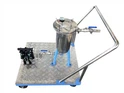
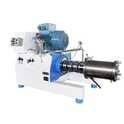
A cement mixer, often recognized as a cornerstone in the construction industry, is a crucial piece of equipment designed specifically for the efficient and consistent mixing of cement, aggregates such as sand and gravel, and water to produce concrete. This concoction, concrete, is one of the most widely used construction materials globally due to its strength, durability, and versatility. In this blog, we will delve into the various aspects of cement mixers, including their types, working principles, and importance in modern construction. As a seasoned mixer supplier, I am excited to share extensive insights and also introduce some of our high - quality mixer products.
Types of Cement Mixers
There are mainly two broad categories of cement mixers: drum mixers and pan mixers.
Drum Mixers
Drum mixers are perhaps the most recognizable type of cement mixers. They come in two main subtypes: tilting drum mixers and non - tilting drum mixers.
Tilting Drum Mixers: In a tilting drum mixer, the drum is mounted on a frame in such a way that it can be tilted. This design allows for easy discharge of the mixed concrete. The drum rotates, and the blades inside the drum lift and drop the materials, ensuring thorough mixing. These mixers are commonly used for small - scale construction projects, such as home renovations and small building extensions. They are relatively easy to operate and maintain.
Non - tilting Drum Mixers: Non - tilting drum mixers, on the other hand, have a fixed drum. The mixed concrete is discharged through a chute at the base of the drum. This type of mixer is often used for larger construction projects where a continuous supply of concrete is required. They are more efficient at handling large volumes of materials and can produce concrete with a more consistent quality.
Pan Mixers
Pan mixers consist of a large, circular pan with blades or paddles that rotate within it. The mixing action in a pan mixer is more intense compared to drum mixers. The blades move in a complex pattern, ensuring that every particle of the materials is thoroughly mixed. Pan mixers are suitable for high - performance concrete production, such as in bridges and high - rise buildings. They can also handle a wider range of materials, including specialty aggregates and additives.
Working Principles of Cement Mixers
The basic working principle of a cement mixer involves the combination of mechanical agitation and the proper proportioning of materials.
First, the correct amounts of cement, aggregates, and water are loaded into the mixer. In modern mixers, this process can be automated to ensure accurate proportions. Once the materials are inside the mixer, the blades or the rotating drum start to move.
In drum mixers, as the drum rotates, the concrete materials are gradually mixed. The lifting and dropping action of the blades help to break up any clumps and ensure uniform distribution of the ingredients. The size and shape of the blades, as well as the rotation speed of the drum, are carefully designed to optimize the mixing process.
In pan mixers, the blades move in a circular or elliptical path, pushing the materials towards the center and then outwards. This continuous motion ensures that all the particles are mixed together, creating a homogeneous concrete mixture.
Importance of Cement Mixers in Construction
Cement mixers play a vital role in construction for several reasons.
Consistency: One of the primary benefits of using a cement mixer is the ability to produce consistent concrete mixtures. By precisely controlling the proportions of materials and the mixing time, construction professionals can ensure that the concrete meets the required strength and durability standards. This consistency is crucial for the long - term performance of buildings, bridges, and other structures.
Efficiency: Cement mixers significantly increase the efficiency of the concrete production process. They can mix large volumes of concrete in a relatively short period, reducing the time and labor required for manual mixing. This allows construction projects to be completed more quickly, saving both time and money.
Quality: A well - mixed concrete mixture results in higher - quality construction. The uniform distribution of cement, aggregates, and water in the mixer ensures that the concrete has better workability, strength, and resistance to environmental factors. This leads to structures that are more durable and require less maintenance over time.
Our Mixer Products as a Supplier
As a mixer supplier, we are committed to providing high - quality mixing solutions for a variety of industries, including construction, chemical, and food processing.


One of our flagship products is the EXJ Series Vacuum Planetary Mixer. This mixer is designed with a unique planetary mixing system, which ensures thorough and efficient mixing of materials. The vacuum feature allows for the removal of air bubbles, resulting in a more compact and high - quality mixture. It is suitable for applications where a high - precision and homogeneous mix is required, such as in the production of advanced composites and electronic pastes.
Another outstanding product in our portfolio is the EBJ/XD Series Butterfly Disperser. This disperser is ideal for breaking up agglomerates and achieving a uniform dispersion of materials. The butterfly - shaped blades provide a high - shear mixing action, which is effective in dispersing pigments, fillers, and other additives in liquids. It is widely used in the paint, ink, and adhesive industries.
We also offer the Vacuum Coaxial Type Homogenizer. This homogenizer combines the functions of mixing and homogenizing under vacuum conditions. It can achieve a high - degree of fineness and uniformity in the mixture, making it suitable for the production of dairy products, cosmetics, and pharmaceutical emulsions.
Contact Us for Procurement
If you are in the market for high - quality mixers for your construction or industrial projects, we would be delighted to have a discussion with you. We can provide detailed product information, customized solutions based on your specific requirements, and competitive pricing. Whether you are a small - scale contractor or a large - scale industrial manufacturer, our experienced team is ready to assist you in finding the perfect mixer for your needs. Reach out to us, and let's start a productive conversation about your procurement requirements.
References
- ACI (American Concrete Institute). (2019). ACI 318 - 19: Building Code Requirements for Structural Concrete and Commentary.
- Concrete Construction Handbook, 4th Edition, Skokie, IL: Portland Cement Association.
- Neville, A. M., & Brooks, J. J. (2010). Concrete Technology, 4th Edition, Pearson Prentice Hall.