Reaction kinetics plays a pivotal role in the design of reactor vessels, influencing everything from the vessel's size and shape to the choice of materials and the overall efficiency of the chemical processes taking place within. As a leading supplier of Reactor & Vessels, I have witnessed firsthand how a deep understanding of reaction kinetics can lead to optimized reactor designs that meet the specific needs of our clients across various industries.
Understanding Reaction Kinetics
Reaction kinetics is the study of the rates at which chemical reactions occur and the factors that influence these rates. It encompasses the analysis of reaction mechanisms, the determination of rate laws, and the identification of the variables that can affect the speed and extent of a reaction. These variables include temperature, pressure, concentration of reactants, and the presence of catalysts.
The rate of a chemical reaction is typically expressed as the change in concentration of a reactant or product per unit time. For a simple reaction (A \rightarrow B), the rate of the reaction can be written as (-\frac{d[A]}{dt}), where ([A]) is the concentration of reactant (A) and (t) is time. The negative sign indicates that the concentration of (A) decreases over time.
The rate law for a reaction describes how the rate of the reaction depends on the concentrations of the reactants. For example, for a reaction (aA + bB \rightarrow cC + dD), the rate law might be of the form (rate = k[A]^m[B]^n), where (k) is the rate constant, (m) and (n) are the reaction orders with respect to (A) and (B) respectively, and ([A]) and ([B]) are the concentrations of (A) and (B).
Impact on Reactor Size and Shape
One of the most significant effects of reaction kinetics on reactor vessel design is the determination of the reactor size. The size of a reactor is directly related to the reaction rate and the desired production rate. A slow - reacting system will require a larger reactor volume to achieve a given production rate compared to a fast - reacting system.
For instance, in a batch reactor, the time required for a reaction to reach a certain conversion is determined by the reaction kinetics. If the reaction is second - order with respect to a reactant, the time to reach a specific conversion will be longer than for a first - order reaction under the same conditions. This means that a larger batch reactor may be needed to accommodate the longer reaction time and achieve the desired output.
The shape of the reactor can also be influenced by reaction kinetics. In some cases, a long and narrow reactor may be preferred for reactions that are highly exothermic. This shape allows for better heat transfer, which is crucial for controlling the reaction rate. On the other hand, a well - mixed, spherical or cylindrical reactor may be more suitable for reactions that require uniform distribution of reactants and catalysts, such as in a continuous stirred - tank reactor (CSTR).


Influence on Material Selection
Reaction kinetics can also guide the selection of materials for the reactor vessel. The temperature and pressure conditions required for a reaction, which are often determined by the reaction kinetics, can dictate the choice of materials that can withstand these conditions without degrading or reacting with the chemicals inside the reactor.
For example, high - temperature reactions may require materials with high melting points and good thermal stability, such as stainless steel or certain ceramics. Reactions that involve corrosive substances may call for materials that are resistant to corrosion, like titanium or glass - lined steel.
In addition, the presence of catalysts in a reaction can also affect material selection. Some catalysts may be sensitive to certain materials, and the reactor vessel must be made of a material that does not poison or deactivate the catalyst.
Effects on Mixing Requirements
The reaction kinetics can have a profound impact on the mixing requirements within the reactor vessel. For reactions that are diffusion - limited, efficient mixing is essential to ensure that reactants are brought into contact with each other at a sufficient rate. In a CSTR, for example, the impeller design and the agitation speed are carefully chosen based on the reaction kinetics to achieve a high degree of mixing.
If the reaction is fast and the reactants need to be quickly and uniformly distributed, a more powerful mixing system may be required. On the other hand, for slow - reacting systems, the mixing requirements may be less stringent.
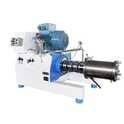
Our Mixing Reactor is designed to meet the diverse mixing needs of different chemical reactions. It incorporates advanced mixing technologies that can be customized according to the specific reaction kinetics and process requirements.
Impact on Heat Transfer
Heat transfer is closely related to reaction kinetics, especially for exothermic or endothermic reactions. The rate at which heat is generated or absorbed during a reaction is determined by the reaction kinetics. For an exothermic reaction, if the heat is not removed quickly enough, the temperature inside the reactor can rise rapidly, which may lead to side reactions, reduced product selectivity, or even safety hazards.
Reactor designs must incorporate effective heat transfer mechanisms to control the temperature and maintain the reaction rate within the desired range. This can involve the use of cooling jackets, coils, or heat exchangers. The size and configuration of these heat transfer devices are determined by the reaction kinetics and the heat generation rate.
Influence on Reactor Operation and Control
Reaction kinetics also affects the operation and control of the reactor vessel. The reaction rate can be influenced by various operating variables such as temperature, pressure, and feed rates. By understanding the reaction kinetics, operators can adjust these variables to optimize the reaction conditions and achieve the desired product quality and yield.
For example, in a continuous flow reactor, the feed rates of reactants can be adjusted based on the reaction kinetics to maintain a steady - state operation. The temperature can be controlled using feedback control systems that monitor the reaction rate and adjust the heating or cooling accordingly.
Role in Scale - up
When scaling up a reactor from a laboratory - scale to an industrial - scale, reaction kinetics plays a crucial role. The reaction kinetics at the laboratory scale may not be directly applicable at the industrial scale due to differences in heat and mass transfer, mixing, and other factors.
A detailed understanding of reaction kinetics is required to ensure that the scale - up process is successful. This involves conducting experiments at different scales, analyzing the data, and using mathematical models to predict the behavior of the reaction at the industrial scale. Our experience as a Reactor & Vessels supplier has shown that a well - planned scale - up based on reaction kinetics can lead to efficient and cost - effective industrial - scale reactors.
Case Study: Movable Tank and Vessel
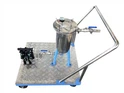
Our Movable Tank and Vessel is an excellent example of how reaction kinetics can be incorporated into reactor design. This type of vessel is designed for applications where flexibility and mobility are required.
The design of the Movable Tank and Vessel takes into account the reaction kinetics of the processes it will be used for. For example, the size and shape of the vessel are optimized based on the reaction rate and the desired production capacity. The material selection ensures that the vessel can withstand the temperature and pressure conditions of the reaction, while the mixing and heat transfer systems are designed to provide efficient operation.
Conclusion
In conclusion, reaction kinetics has far - reaching effects on reactor vessel design. It influences every aspect of the design process, from the size and shape of the reactor to the choice of materials, mixing requirements, heat transfer, operation, and scale - up. As a Reactor & Vessels supplier, we understand the importance of incorporating reaction kinetics into our designs to provide our clients with high - performance reactors that meet their specific needs.
If you are in the market for a reactor vessel and want to discuss how reaction kinetics can be applied to your specific process, we invite you to contact us for a detailed consultation. Our team of experts is ready to work with you to design and build the perfect reactor vessel for your application.
References
- Fogler, H. S. (2006). Elements of Chemical Reaction Engineering. Prentice Hall.
- Levenspiel, O. (1999). Chemical Reaction Engineering. Wiley.
- Smith, J. M., Van Ness, H. C., & Abbott, M. M. (2005). Introduction to Chemical Engineering Thermodynamics. McGraw - Hill.