How to optimize the bead filling ratio in a gravure ink bead mill?
As a seasoned supplier of Gravure Ink Bead Mills, I've witnessed firsthand the pivotal role that the bead filling ratio plays in the efficiency and quality of the ink production process. In this blog, I'll share some insights on how to optimize this crucial parameter to achieve the best results.
Understanding the Bead Filling Ratio
The bead filling ratio refers to the volume of beads in the grinding chamber of the bead mill relative to the total volume of the chamber. It is a critical factor that affects the grinding efficiency, particle size distribution, and overall quality of the gravure ink. A proper bead filling ratio ensures that there are enough beads to provide sufficient grinding energy while allowing for proper flow of the ink through the mill.
Factors Affecting the Bead Filling Ratio
Several factors need to be considered when determining the optimal bead filling ratio:
- Ink Viscosity: High - viscosity inks require a lower bead filling ratio to allow for better flow. If the bead filling ratio is too high, the ink may not be able to circulate properly, leading to poor grinding and potential overheating. For low - viscosity inks, a higher bead filling ratio can be used to increase the grinding intensity.
- Bead Size: Smaller beads generally require a higher filling ratio to achieve the same grinding efficiency as larger beads. Small beads have a larger surface area per unit volume, which allows for more contact with the ink particles. However, if the bead filling ratio is too high with small beads, it can cause excessive pressure and wear on the mill components.
- Mill Design: Different bead mill designs have different optimal bead filling ratios. For example, a vertical bead mill may have different requirements compared to a horizontal bead mill. The internal structure of the mill, such as the agitator design and the flow path, also influences the ideal filling ratio.
Steps to Optimize the Bead Filling Ratio
- Initial Testing: Start with a conservative bead filling ratio based on the general guidelines for your type of ink and mill. For most gravure inks, an initial filling ratio of 60 - 70% is a good starting point. Conduct a series of test runs with different filling ratios while keeping other parameters constant, such as the agitation speed, temperature, and ink flow rate.
- Analyze the Results: After each test run, analyze the particle size distribution of the ink using a particle size analyzer. Look for the filling ratio that produces the desired particle size and distribution. A narrower particle size distribution is usually preferred for gravure inks as it ensures better print quality. Also, observe the grinding efficiency, which can be measured by the time it takes to reach the target particle size.
- Consider the Energy Consumption: Higher bead filling ratios generally require more energy to operate the mill. While a high filling ratio may lead to faster grinding, it can also increase the energy consumption and wear on the mill. Therefore, it's important to find a balance between the grinding efficiency and the energy cost. Calculate the specific energy consumption (energy per unit mass of ink processed) for each test run and choose the filling ratio that offers the best combination of efficiency and energy savings.
- Monitor the Mill Performance: Once you've determined the optimal bead filling ratio, monitor the mill performance over time. Factors such as bead wear, ink formulation changes, and mill component degradation can affect the optimal ratio. Regularly check the particle size distribution, grinding efficiency, and energy consumption to ensure that the mill is still operating at its best.
The Impact of Optimized Bead Filling Ratio
Optimizing the bead filling ratio can bring several benefits to the gravure ink production process:
- Improved Ink Quality: A well - optimized bead filling ratio results in a more uniform particle size distribution, which enhances the printability of the gravure ink. The ink will have better color strength, gloss, and transfer properties, leading to higher - quality printed products.
- Increased Productivity: By achieving the optimal filling ratio, the grinding time can be reduced, allowing for higher production rates. This means more ink can be produced in a shorter period, increasing the overall productivity of the manufacturing process.
- Cost Savings: Optimizing the bead filling ratio can lead to reduced energy consumption and longer bead and mill component lifespan. This translates into lower operating costs and less frequent maintenance and replacement expenses.
Related Products
If you're interested in other equipment related to the production process, we also offer some high - quality products. For example, our Liquid Fertilizers Production Machine is designed to meet the needs of the fertilizer industry. It provides efficient and reliable production capabilities.
Our Bead Mill For Nano Material is suitable for applications where ultra - fine grinding is required. It can achieve excellent results in processing nano - scale materials.

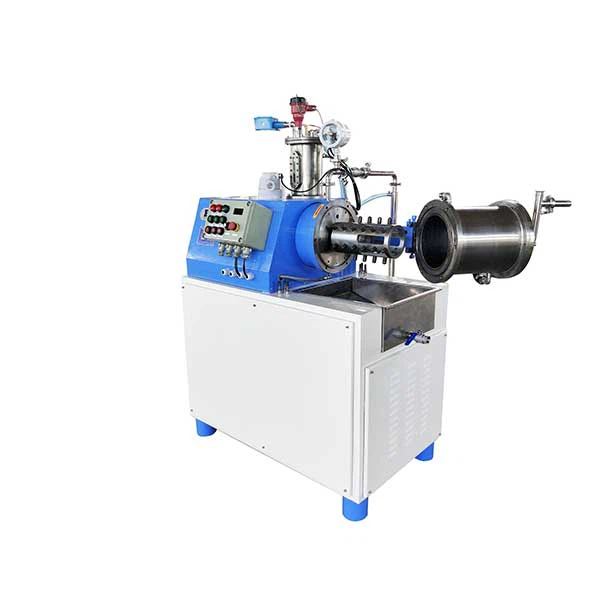
And the EBM Series Basket Mill With Scraper For High Viscosity is specifically designed for high - viscosity materials. It ensures proper mixing and grinding even for challenging substances.
Conclusion
Optimizing the bead filling ratio in a gravure ink bead mill is a complex but essential process. By understanding the factors that affect the ratio, conducting thorough testing, and continuously monitoring the mill performance, you can achieve the best results in terms of ink quality, productivity, and cost - effectiveness.
If you're looking to improve your gravure ink production process or are interested in our bead mills and related products, we encourage you to reach out to us for further discussion. Our team of experts is ready to assist you in finding the optimal solutions for your specific needs.
References
- "Principles of Grinding and Dispersing" by some well - known author in the field of powder technology.
- "Ink Manufacturing Technology" published by a relevant industry association.
- Technical manuals and research papers provided by the bead mill manufacturers.