Hey there! As a filter supplier, I've been knee - deep in the world of FIR filter design. FIR (Finite Impulse Response) filters are super important in signal processing, and one of the key aspects of their design is the use of window functions. In this blog, I'll walk you through some common window functions used in FIR filter design.
What Are Window Functions and Why Do We Need Them?
Before we jump into the specific window functions, let's quickly understand what they are and why they're used. When we design an FIR filter, we often start with an ideal filter response in the frequency domain. But to implement this filter in the real world, we need to convert it to the time domain. The ideal filter response in the time domain is infinite in length, which is not practical. So, we truncate it to a finite length. However, this truncation causes spectral leakage, which means the frequency response of the truncated filter is different from the ideal one. Window functions come to the rescue here. They taper the edges of the truncated impulse response, reducing the spectral leakage and improving the filter's performance.
Rectangular Window
The rectangular window is the simplest window function out there. It's just a constant value of 1 for the length of the filter and 0 outside that range. In other words, it doesn't taper the edges at all. Mathematically, it can be written as:
[w[n]=\begin{cases}
1, & 0\leq n\leq N - 1\
0, & \text{otherwise}
\end{cases}]
where (N) is the length of the filter.
The rectangular window has the narrowest main lobe among all window functions, which means it has the best frequency resolution. But it also has high side lobes, which leads to significant spectral leakage. This makes it suitable for applications where the frequency components are well - separated and we need good frequency resolution, like in some simple low - pass filter designs.
Hamming Window
The Hamming window is a popular choice in FIR filter design. It's defined as:
[w[n]=0.54 - 0.46\cos\left(\frac{2\pi n}{N - 1}\right),\quad 0\leq n\leq N - 1]
The Hamming window tapers the edges of the impulse response, reducing the side lobes compared to the rectangular window. The main lobe is wider than that of the rectangular window, but the side lobes are much lower. This results in less spectral leakage and a better overall frequency response. It's a good all - around window function and is used in many general - purpose FIR filter designs.
Hanning Window
The Hanning window is similar to the Hamming window but with a different formula. It's given by:
[w[n]=0.5\left(1-\cos\left(\frac{2\pi n}{N - 1}\right)\right),\quad 0\leq n\leq N - 1]
The Hanning window has even lower side lobes than the Hamming window, but its main lobe is a bit wider. This makes it suitable for applications where reducing the side lobes is more important than having a very narrow main lobe, such as in audio processing where we want to minimize the interference between different frequency components.
Blackman Window
The Blackman window is another window function that offers even better side - lobe suppression. It's defined as:
[w[n]=0.42 - 0.5\cos\left(\frac{2\pi n}{N - 1}\right)+0.08\cos\left(\frac{4\pi n}{N - 1}\right),\quad 0\leq n\leq N - 1]
The Blackman window has very low side lobes, which makes it great for applications where we need to isolate a specific frequency component from others. However, it has a wider main lobe compared to the previous windows, which means lower frequency resolution.
Kaiser Window
The Kaiser window is a bit different from the others. It has a parameter (\beta) that allows us to control the trade - off between the main - lobe width and the side - lobe level. The formula for the Kaiser window is:
[w[n]=\frac{I_0\left(\beta\sqrt{1-\left(\frac{2n}{N - 1}-1\right)^2}\right)}{I_0(\beta)},\quad 0\leq n\leq N - 1]
where (I_0(x)) is the zero - order modified Bessel function of the first kind. By adjusting the value of (\beta), we can make the window more like a rectangular window (for small (\beta)) or more like a window with very low side lobes (for large (\beta)). This flexibility makes the Kaiser window suitable for a wide range of applications.
How These Window Functions Impact Our Filter Products
As a filter supplier, we use these window functions to design FIR filters that meet different customer requirements. For example, if a customer needs a filter for a simple audio application where we just want to cut off high - frequency noise, a Hamming or Hanning window might be a good choice. These windows can reduce the spectral leakage and provide a smooth frequency response.
On the other hand, if the customer is working on a project where they need to precisely isolate a specific frequency component, like in some communication systems, we might use a Blackman or Kaiser window. These windows offer better side - lobe suppression, which is crucial for accurate frequency separation.
Our Filter Filling Machines
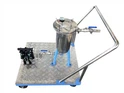
At our company, we don't just focus on filter design. We also have a range of Automatic Filling Line that can fill filters with different substances. Our EGL - 4 Automatically Filling machine for 0.4~4L is a great option for filling filters of various sizes. It's designed to be efficient and accurate, ensuring that each filter is filled to the right level.
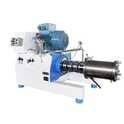
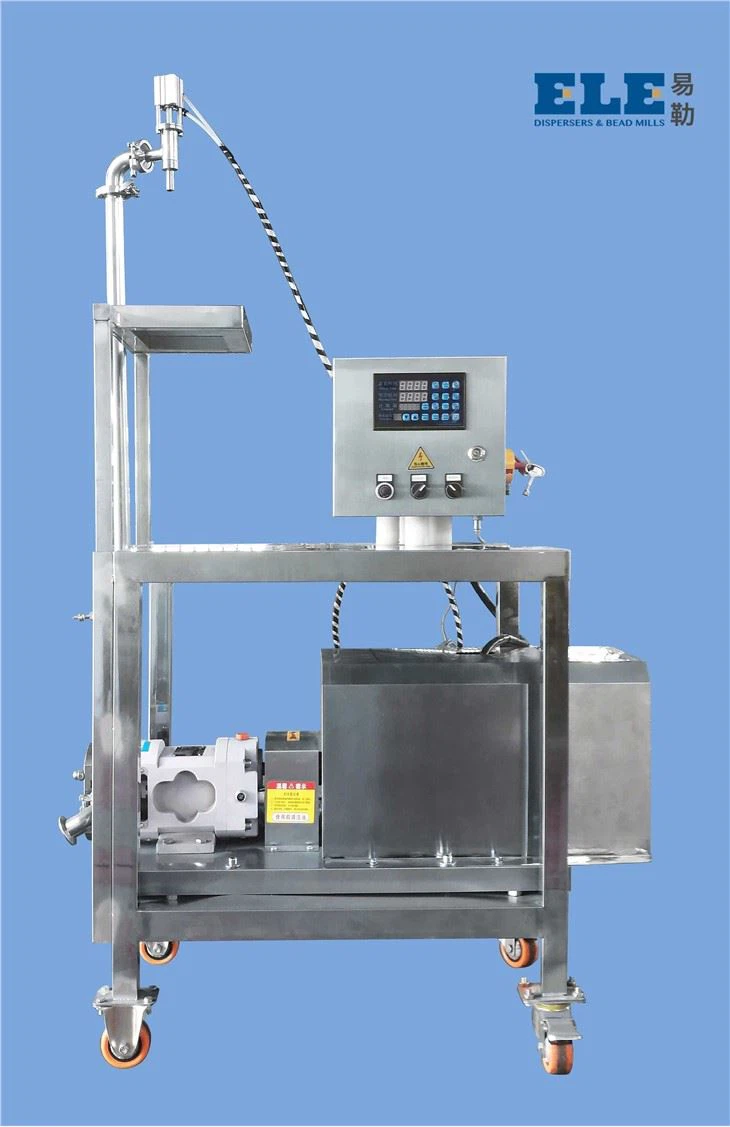
We also have a Rotary Pump Filling Machine that can handle different types of fluids. Whether it's a viscous liquid or a thin solution, this machine can do the job. These filling machines are an important part of our product line, as they ensure that the filters we design are properly filled and ready for use.
Let's Talk Business
If you're in the market for high - quality FIR filters or need a reliable filling machine for your filter production, we'd love to hear from you. We have a team of experts who can help you choose the right window function for your filter design and the best filling machine for your needs. Whether you're a small - scale manufacturer or a large - scale industrial company, we can provide customized solutions. So, don't hesitate to reach out and start a conversation about your procurement needs. We're here to make sure you get the best products and services.

References
- Oppenheim, A. V., & Schafer, R. W. (1989). Discrete - Time Signal Processing. Prentice - Hall.
- Lyons, R. G. (2011). Understanding Digital Signal Processing. Pearson.