In the context of advancing sustainable practices, the recycling of materials has become a global priority. Recycling not only conserves natural resources but also mitigates environmental pollution. One crucial step in the recycling process is the grinding of materials, which can significantly impact the efficiency and effectiveness of recycling operations. As a supplier of Pin Type Bead Mills, I am often asked whether these mills can be used for recycling materials grinding. In this blog, I will explore the potential of Pin Type Bead Mills in recycling applications, discussing their working principles, advantages, and limitations.


Understanding Pin Type Bead Mills
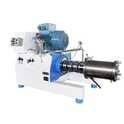
Pin Type Bead Mills are a type of high - energy wet grinding equipment widely used in various industries for particle size reduction and dispersion. The basic structure of a Pin Type Bead Mill consists of a cylindrical chamber filled with grinding media (usually beads made of ceramic, glass, or zirconia) and multiple pins mounted on a rotating shaft inside the chamber.
When the shaft rotates, the pins agitate the grinding media, creating a highly turbulent environment. The material to be ground is pumped into the chamber, and as it passes through the agitated media, it is subjected to intense shear and impact forces. These forces cause the particles in the material to break down into smaller sizes, resulting in a fine and uniform dispersion.
Suitability of Pin Type Bead Mills for Recycling Materials Grinding
1. Wide Range of Processable Materials
Pin Type Bead Mills can handle a diverse range of materials, making them suitable for different recycling scenarios. Whether it's plastics, metals, ceramics, or even biological materials, the intense grinding action of the Pin Type Bead Mill can break down these materials into more manageable sizes. For example, in the recycling of plastic waste, the mill can reduce large plastic pieces into fine powders, which can then be reused in the production of new plastic products.
2. High Grinding Efficiency
The design of the Pin Type Bead Mill allows for high - energy input, resulting in rapid and efficient particle size reduction. The multiple pins on the rotating shaft create a large number of impact and shear points, maximizing the interaction between the grinding media and the material. This high - efficiency grinding can save time and energy in the recycling process, making it more cost - effective.
3. Flexibility in Particle Size Control
One of the key requirements in recycling is the ability to control the particle size of the ground material. Pin Type Bead Mills offer excellent flexibility in this regard. By adjusting parameters such as the rotational speed of the shaft, the size and type of grinding media, and the flow rate of the material, operators can accurately control the final particle size of the recycled product. This is essential for ensuring that the recycled material meets the quality standards required for further processing.
4. Gentle Processing for Sensitive Materials
Some recycling materials may be sensitive to heat or mechanical stress. Pin Type Bead Mills can be designed to operate at relatively low temperatures, minimizing the damage to heat - sensitive materials. Additionally, the use of appropriate grinding media and operating conditions can provide a gentle grinding action, preventing excessive degradation of the recycled material.
Examples of Recycling Applications
1. Plastics Recycling
In the plastics recycling industry, Pin Type Bead Mills can be used to grind post - consumer plastics into fine powders. These powders can then be used as raw materials for the production of new plastic products, such as filaments for 3D printing or plastic pellets for injection molding. The ESW - 750 Lab Scale Horizontal Bead Mill is an excellent choice for small - scale plastics recycling research and development, allowing for precise control of the grinding process.
2. Battery Recycling
With the increasing popularity of electric vehicles and portable electronics, battery recycling has become a critical issue. Pin Type Bead Mills can be used to grind battery components, such as electrodes and cathodes, into fine particles. This facilitates the separation and recovery of valuable metals, such as lithium, cobalt, and nickel. The Bead Mill Homogenizer can be effectively utilized in this application, providing uniform and efficient grinding of battery materials.
3. Biological Material Recycling
In the field of biotechnology, Pin Type Bead Mills can be employed for the recycling and processing of biological materials. For example, in the recycling of cell cultures, the Bead Mill for Cell Disruption can be used to break open cells and release their internal components, which can then be further processed and recycled.
Limitations and Considerations
1. Material Compatibility
Although Pin Type Bead Mills can process a wide range of materials, there are still some limitations in terms of material compatibility. Some materials may be too hard or abrasive, which can cause excessive wear on the pins and grinding media. In such cases, it is necessary to select appropriate grinding media and materials for the mill components to ensure long - term operation.
2. Maintenance Requirements
The operation of Pin Type Bead Mills requires regular maintenance to ensure optimal performance. The grinding media needs to be replenished periodically, and the pins and other components may need to be inspected and replaced if there is excessive wear. Failure to perform proper maintenance can lead to a decrease in grinding efficiency and premature equipment failure.
3. Cost
The initial investment and operating cost of Pin Type Bead Mills can be relatively high. The cost of the equipment itself, as well as the cost of grinding media and energy consumption, need to be considered when evaluating the feasibility of using these mills for recycling applications. However, the long - term benefits in terms of improved recycling efficiency and product quality may outweigh the initial costs.
Conclusion
In conclusion, Pin Type Bead Mills have significant potential for use in recycling materials grinding. Their wide range of processable materials, high grinding efficiency, flexibility in particle size control, and gentle processing capabilities make them suitable for various recycling applications. However, it is important to consider the limitations and challenges, such as material compatibility, maintenance requirements, and cost, when implementing these mills in recycling operations.
As a supplier of Pin Type Bead Mills, we are committed to providing high - quality equipment and technical support to meet the needs of the recycling industry. If you are interested in exploring the use of Pin Type Bead Mills for your recycling applications, we invite you to contact us for a detailed discussion and to start a procurement negotiation. Our team of experts will be happy to assist you in finding the most suitable solution for your specific requirements.
References
- "Principles of Grinding and Dispersing" by various authors in the field of powder technology.
- Industry reports on recycling technologies and equipment.
- Research papers on the application of bead mills in different industries.