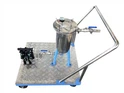
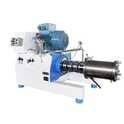
When it comes to the dispersion of materials, the high - speed disperser has long been a staple in various industries. From paint and coatings to chemicals and pharmaceuticals, its ability to break down agglomerates and uniformly distribute particles is well - documented. But a question that often arises is whether a high - speed disperser can be used for dispersing optical materials. In this blog post, as a high - speed disperser supplier, I'll explore this topic in detail.
Understanding Optical Materials
Optical materials are substances that are used in the field of optics, which includes applications such as lenses, prisms, optical fibers, and displays. These materials have specific requirements in terms of their optical properties, such as refractive index, transparency, and dispersion of light. Materials like glass, polymers, and certain types of crystals are commonly used as optical materials.


One of the key factors in the quality of optical materials is the uniformity of the particles within the material. If there are agglomerates or unevenly distributed particles, it can lead to scattering of light, which in turn degrades the optical performance of the final product. For example, in a lens, any non - uniformity can cause blurring or distortion of the image.
How High - Speed Dispersers Work
High - speed dispersers operate on the principle of mechanical agitation. They consist of a motor - driven shaft with a dispersing blade at the end. When the motor is turned on, the blade rotates at a high speed, creating a strong flow of the material in the container. This flow generates shear forces that act on the agglomerates of particles, breaking them down into smaller, individual particles.
The high - shear forces can be adjusted by changing the speed of the motor and the design of the dispersing blade. Different blade designs are available, each suited for different types of materials and dispersion requirements. For example, a saw - toothed blade is often used for materials with high viscosity, as it can create more intense shear forces.
Feasibility of Using High - Speed Dispersers for Optical Materials
Advantages
- Particle Size Reduction: High - speed dispersers are extremely effective at reducing the particle size of agglomerates. In optical materials, where the size of particles can significantly affect light propagation, achieving a uniform and small particle size is crucial. By breaking down large agglomerates into smaller particles, high - speed dispersers can improve the optical clarity and performance of the material.
- Uniform Dispersion: Uniform distribution of particles is vital for optical materials. The strong flow created by high - speed dispersers ensures that the particles are evenly dispersed throughout the matrix. This uniformity helps in minimizing the scattering of light and enhancing the overall optical quality of the material.
- Efficiency: High - speed dispersers can achieve dispersion quickly, which is an advantage in industrial production. Time is often a critical factor in manufacturing, and the ability of high - speed dispersers to rapidly disperse optical materials can increase production efficiency and reduce costs.
Challenges
- Contamination Risk: During the dispersion process, there is a risk of contamination from the dispersing equipment itself, such as metal particles from the shaft or blade. In optical materials, even the smallest amount of contamination can have a significant impact on the optical properties, causing haze or color changes. To mitigate this risk, high - speed dispersers for optical materials should be made of high - quality, non - contaminating materials.
- Over - Shearing: While shear forces are necessary for dispersion, excessive shearing can damage the optical properties of some sensitive materials. For example, some polymers used in optical applications can degrade under high - shear conditions, leading to changes in their refractive index or transparency. It is essential to carefully control the speed and duration of the dispersion process to avoid over - shearing.
Types of High - Speed Dispersers Suitable for Optical Materials
Vacuum Type High Speed Disperser
The Vacuum Type High Speed Disperser is particularly useful for dispersing optical materials. In a vacuum environment, the presence of air bubbles can be minimized. Air bubbles in optical materials can cause light scattering, which is highly undesirable. By operating under vacuum, the vacuum type high - speed disperser can ensure a bubble - free dispersion, resulting in a more optically clear final product.
Electrical Lifting High Speed Disperser
The Electrical Lifting High Speed Disperser offers flexibility in the dispersion process. It allows for easy adjustment of the height of the dispersing blade, which is important for different container sizes and dispersion requirements. This type of disperser can be used to disperse optical materials in various batch sizes, from small - scale laboratory production to large - scale industrial manufacturing.
Laboratory High Speed Disperser
The Laboratory High Speed Disperser is ideal for research and development of optical materials. It provides a controlled environment for testing different dispersion parameters, such as speed, time, and blade design. Researchers can use this type of disperser to optimize the dispersion process for new optical materials before scaling up to industrial production.
Considerations for Using High - Speed Dispersers with Optical Materials
- Material Compatibility: Before using a high - speed disperser for optical materials, it is essential to ensure that the materials are compatible with the disperser components. This includes checking for chemical reactions between the material and the blade, shaft, or container.
- Process Optimization: The dispersion process for optical materials needs to be carefully optimized. This involves determining the appropriate speed, time, and blade design based on the specific properties of the optical material, such as viscosity, particle size, and sensitivity to shear.
- Quality Control: After the dispersion process, strict quality control measures should be in place to ensure that the optical properties of the material meet the required standards. This may include testing for transparency, refractive index, and light scattering.
Conclusion
In conclusion, a high - speed disperser can indeed be used for dispersing optical materials, but it comes with its own set of challenges and considerations. The advantages of particle size reduction, uniform dispersion, and efficiency make high - speed dispersers a viable option for the optical materials industry. However, the risks of contamination and over - shearing need to be carefully managed.
As a high - speed disperser supplier, we offer a range of Vacuum Type High Speed Disperser, Electrical Lifting High Speed Disperser, and Laboratory High Speed Disperser that are designed to meet the specific needs of the optical materials industry. If you are interested in learning more about how our high - speed dispersers can be used for your optical material dispersion requirements, or if you have any questions, please feel free to contact us for further discussion and potential procurement.
References
- Smith, J. (2018). "Advanced Dispersion Techniques in Optical Material Processing". Journal of Optical Materials Science.
- Johnson, A. (2019). "The Role of High - Speed Dispersers in Industrial Manufacturing". Manufacturing Review.
- Brown, C. (2020). "Controlling Particle Size in Optical Materials". Optics Research Journal.